Official

The Architecture of Obsession: Cinema of the Fixated Mind

Eight films in which a character's consuming fixation drives the narrative, examined through the directorial techniques that externalise interiority: subjective sound design, vertiginous framing, and temporal distortion.

by KinoChain · Narrative story · 27 Jul 2026

  1. Step 1

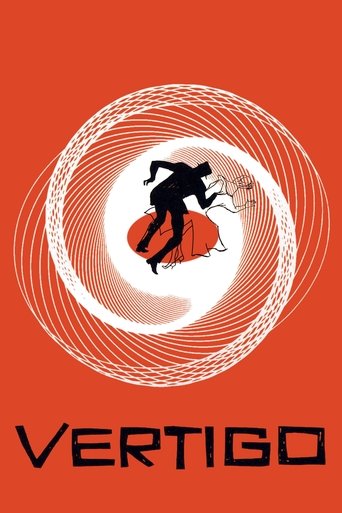
    Vertigo (1958)

    Hitchcock's masterpiece of romantic obsession, where retired detective Scottie Ferguson's acrophobia and fixation on a ghostly woman lead him to reconstruct her image onto a living woman. The film's famous dolly-zoom and colour-coded lighting externalise Scottie's spiralling interior state.
  2. Step 2

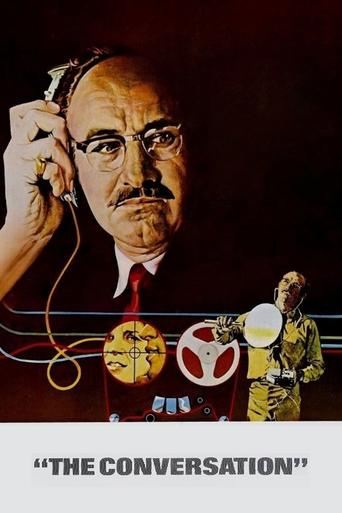
    The Conversation (1974)

    Why watch next

    From Hitchcock's visual obsession to Coppola's aural one: both films use their protagonist's professional fixation (detective work, surveillance) as a lens for psychological disintegration, but The Conversation shifts the sensory focus from the eye to the ear.

    Coppola's surveillance thriller follows audio surveillance expert Harry Caul, whose obsessive need to control his environment and uncover a hidden truth unravels his sanity. The film's layered sound design, muffled dialogue, tape hiss, and reverb, becomes a direct conduit to Harry's paranoid interiority.

  3. Step 3

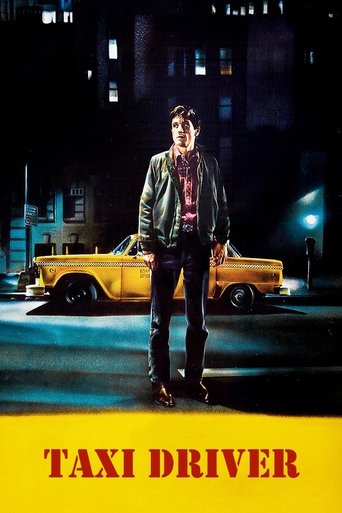
    Taxi Driver (1976)

    Why watch next

    Where The Conversation internalises obsession through sound, Taxi Driver externalises it through the city itself: Travis's cab becomes a mobile prison, and Scorsese's restless camera mirrors his protagonist's inability to settle.

    Scorsese's portrait of Travis Bickle, a Vietnam veteran whose obsessive disgust with New York's 'scum' curdles into a violent crusade. Bernard Herrmann's atonal score, the prowling Steadicam, and Travis's diary voiceover construct a subjective cityscape where every street is a provocation.

  4. Step 4

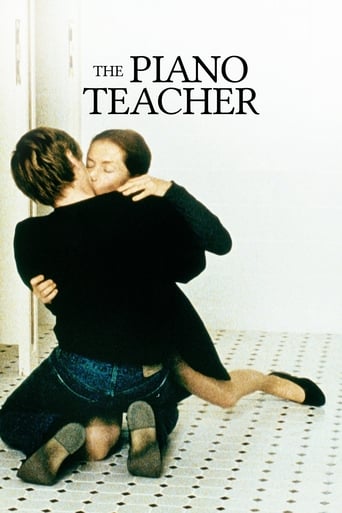
    The Piano Teacher (2001)

    Why watch next

    From Travis's explosive violence to Erika's implosive self-destruction: both films use a central fixation (cleansing the city, sexual submission) to expose the fault lines of a damaged psyche, but Haneke's formal restraint denies catharsis, forcing the viewer into complicity.

    Haneke's cold dissection of Erika Kohut, a repressed piano teacher whose masochistic sexual fixations collide with a younger student's advances. The film's static, clinical compositions and abrupt cuts mirror Erika's compartmentalised psyche, while the diegetic piano pieces become her only outlet for emotion.

  5. Step 5

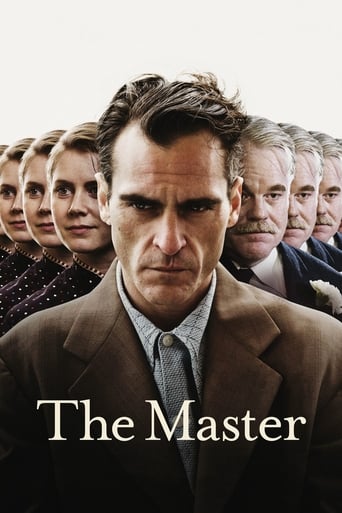
    The Master (2012)

    Why watch next

    Like The Piano Teacher, The Master examines a fixation that blurs the line between desire and control; but where Haneke uses stasis, Anderson uses kinetic, lurching camera movements to externalise Freddie's inner turmoil, especially in the film's hypnotic processing sessions.

    P.T. Anderson's study of the volatile bond between Freddie Quell, a traumatised WWII veteran, and Lancaster Dodd, the charismatic leader of a cult-like movement. The film's 65mm photography and disorienting sound design, echoes, overlapping dialogue, and sudden silences, convey Freddie's alcoholic haze and desperate need for belonging.

  6. Step 6

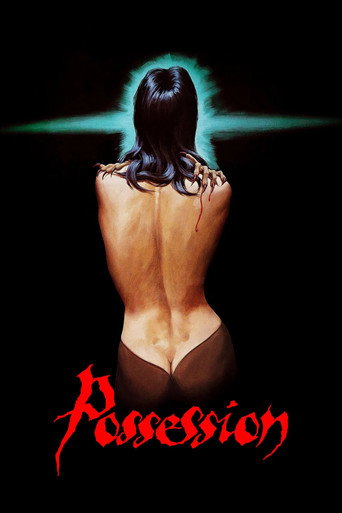
    Possession (1981)

    Why watch next

    The Master's psychological fixation becomes literalised in Possession: where Freddie's obsession is channelled through a cult, Anna's manifests as a monster. Żuławski's hysterical style pushes interiority into the realm of the uncanny, a formal leap from Anderson's controlled chaos.

    Żuławski's deranged psychodrama about a woman's affair with a grotesque, tentacled creature, and her husband's obsessive pursuit of the truth. The film's frantic handheld camera, jarring cuts, and visceral performances create a world where interior states bleed into reality; the creature is literally the physical manifestation of Anna's repressed desires.

  7. Step 7

    Cure (1997)

    Why watch next

    Possession externalises obsession as a monster; Cure externalises it as a contagion. Both films use genre frameworks (horror, thriller) to explore how fixation can be transmitted, but Kurosawa's minimalist style, static frames, ambient sound, generates a different kind of dread: the horror of emptiness.

    Kurosawa's hypnotic thriller follows detective Kenichi Takabe as he pursues a mysterious amnesiac who can induce others to commit murder through whispered suggestions. The film's flat, desaturated compositions and long takes create a trance-like atmosphere, while the killer's fixation on "emptying"others mirrors the detective's own repressed trauma.

  8. Step 8

    Perfect Blue (1998)

    Why watch next

    Cure and Perfect Blue both explore the dissolution of self through external fixation (the killer's influence, the stalker's projection). Kon's film radicalises this by making the medium itself, animation, a tool for ontological uncertainty, pushing the subjective into the fabric of the image.

    Kon's animated psychological thriller about Mima, a pop idol who quits singing to become an actress, only to be stalked by an obsessive fan and haunted by a doppelgänger. The film's seamless blending of reality, fantasy, and delusion, achieved through match cuts, shifting aspect ratios, and unreliable colour palettes, mirrors Mima's fractured identity.