Official

The Epic Journey: An Odyssey Narrative Chain

Homer's Odyssey is the foundational blueprint for the homebound journey, tracking a weary warrior's attempt to return to his family. This six-film narrative chain maps that epic structure across cinema, where each hop represents a distinct thematic stage rather than a simple shared cast member.

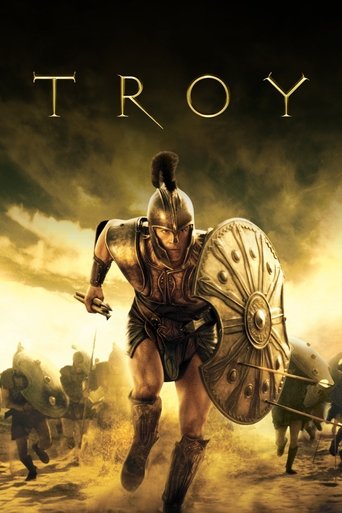
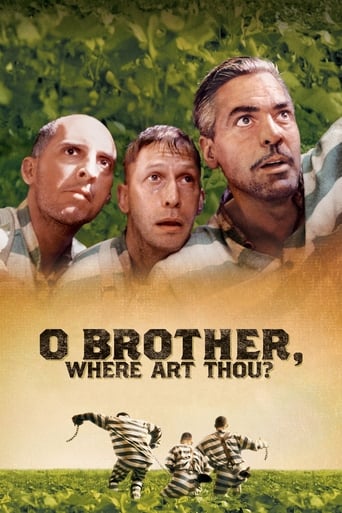
Beginning with Troy (2004), the chain establishes the catalyst: the fall of the city and the end of war. From there, it modernises Homer's mythical hazards into 1930s Mississippi with the Coen brothers' O Brother, Where Art Thou? (2000), before shifting into the brutal physical endurance of the American Civil War in Cold Mountain (2003).

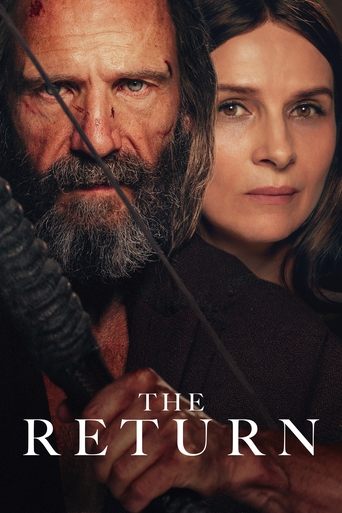
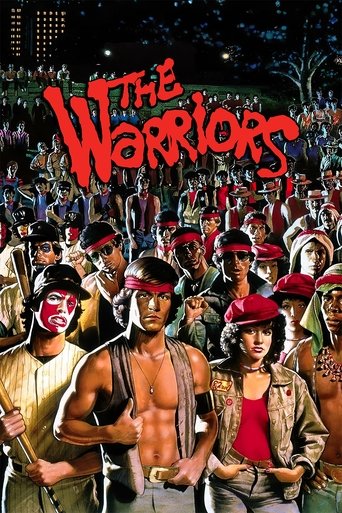
The journey then turns inwards with Guy Maddin's surrealist Keyhole (2011), representing the hero's psychological descent into the underworld. This leads directly into The Return (2024), focusing on a battle-worn king reclaiming his home from predatory suitors. Finally, the chain closes with The Warriors (1979), stripping the myth down to its kinetic core as a street gang fights through thirty miles of hostile territory to reach safety.

Together, these six titles demonstrate how one ancient myth continuously shapes cinematic storytelling across genres, eras, and styles.

by KinoChain · Narrative story · 27 Jul 2026

  1. Step 1

    Troy (2004)

    You cannot start the journey home until the war is won. This film establishes the end of the Trojan War, the deceptive cunning of Odysseus (played here by Sean Bean), and the moment the Greek forces turn their backs on the battlefield to head across the sea.

  2. Step 2

    O Brother, Where Art Thou? (2000)

    Why watch next

    We move from the literal battlefield of antiquity into a creative, modernised retelling of the chaotic, episodic wanderings that follow the war.

    The Coen Brothers explicitly map Ulysses Everett McGill’s escape across 1930s Mississippi to Homer’s monster-filled seas. It covers the iconic episodic encounters: the Siren song in the river, Big Dan Teague as the one-eyed Cyclops, and a blind prophet predicting their fate.

  3. Step 3

    Cold Mountain (2003)

    Why watch next

    Having experienced the wild, episodic journey and mythical threats, the chain shifts from lighthearted satire to the harsh, grueling physical reality of a soldier trying to walk back to his wife.

    In the wake of the American Civil War, Inman deserted his post to walk hundreds of miles back to his beloved Ada. It captures the sheer exhaustion of the late-stage journey, where every mile is a battle against corrupt home-guard forces and starvation.

  4. Step 4

    Keyhole (2011)

    Why watch next

    Once the mental ghosts are faced, the hero steps into the physical threshold of home to reclaim his life and family.

    Guy Maddin’s surrealist film features a gangster named Ulysses who wanders through a claustrophobic, ghost-filled house to find his wife. It serves as the narrative’s descent into Hades, forcing the hero to confront his past sins, lingering guilt, and spectral memories before he can truly be "home."


  5. Step 5

    The Return (2024)

    Why watch next

    With the home reclaimed and the epic wrapped up, the final hop offers a thrilling, stylised coda showing how the core concept of the Odyssey (a desperate band navigating hostile territory to reach safety) translates into a modern urban landscape.

    Starring Ralph Fiennes as a battle-worn Odysseus, this grounded drama focuses entirely on the final books of the epic. An exhausted, traumatised king washes up on Ithaca's shores to find his wife besieged by aggressive suitors, forcing him to plan his final act of reclamation.

  6. Step 6

    The Warriors (1979)

    Why watch next

    The Warriors serves as the kinetic coda to the entire arc. Once the core narrative of The Odyssey concludes with the reclamation of home in The Return, this final hop demonstrates the timelessness of Homer's blueprint. It distils the entire epic into pure motion, stripping away the royalty and divine intervention to show how the fundamental drive to reach safe harbour functions in a modern, stylised urban setting.

    Walter Hill’s sleek urban thriller strips Homer’s epic down to its most visceral element: the desperate, instinctual fight to get back home. Falsely accused of assassinating a visionary leader, a framed Coney Island crew must navigate thirty miles of hostile street turf to reach safety before sunrise. It translates the mythical hazards of The Odyssey into an iconic, pulp-fuelled survival gauntlet.