Official

Escapes from Broken Realities

A journey through films where children and the childlike build imaginative refuges from fractured worlds, celebrating the twentieth anniversary of Terry Gilliam's Tideland. Each step moves from the stark to the surreal, tracing how the mind transforms trauma into wonder.

by KinoChain · Narrative story · 1 Aug 2026

  1. Step 1

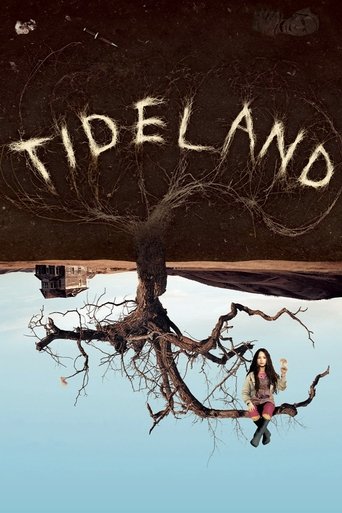
    Tideland (2005)

    A young girl, Jeliza-Rose, retreats into a fantasy world populated by doll heads and ghostly voices to cope with her father's overdose and the isolation of a decaying farmhouse. Gilliam's film is a fever dream of resilience and horror, where imagination is the only lifeline.
  2. Step 2

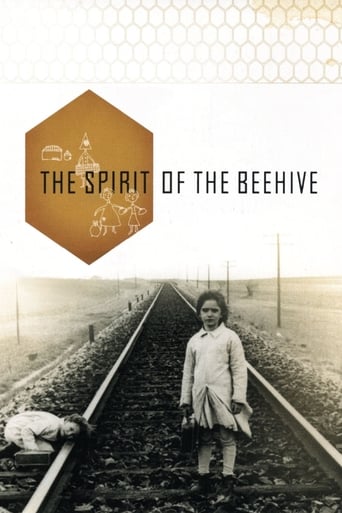
    The Spirit of the Beehive (1973)

    Why watch next

    Like Jeliza-Rose, Ana builds a secret world from cinematic fragments, but where Tideland is loud and grotesque, this is hushed and delicate, shifting the tone to a more contemplative escape.

    In a small Castilian village after the Spanish Civil War, a girl becomes obsessed with the Frankenstein film she has seen, projecting her own fears and hopes onto the monster. The film is a quiet, haunting study of childhood perception and the creation of personal mythologies.

  3. Step 3

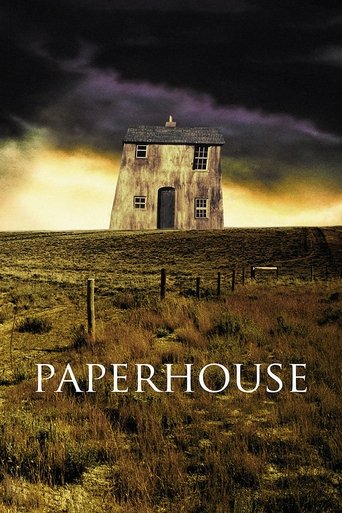
    Paperhouse (1988)

    Why watch next

    Both films centre on a child's imaginative projection, but Paperhouse makes the fantasy tangible and interactive, taking the internal world of The Spirit of the Beehive and giving it physical form.

    A sick girl discovers that her drawings become real when she dreams, allowing her to confront a mysterious boy in a house she has sketched. Bernard Rose's film blurs the line between creation and reality, showing how a child's art can become a sanctuary and a threat.

  4. Step 4

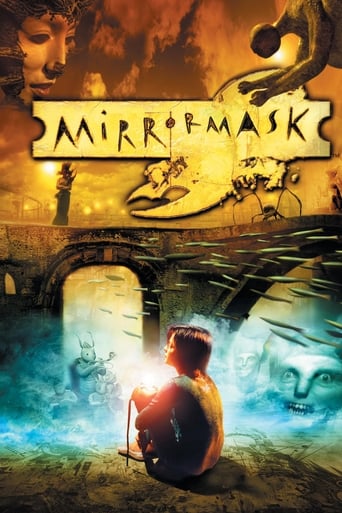
    MirrorMask (2005)

    Why watch next

    Where Paperhouse's dreamscape is personal, MirrorMask expands the escape into a full-blown fantasy realm, echoing Tideland's visual excess while making the emotional stakes more explicit.

    A young circus performer is drawn into a fantastical world of light and dark to save a queen, only to realise she is navigating her own fears about her mother's illness. Dave McKean's visual feast is a direct descendant of Gilliam's aesthetic, with a heroine who must confront her reality through a dreamlike quest.

  5. Step 5

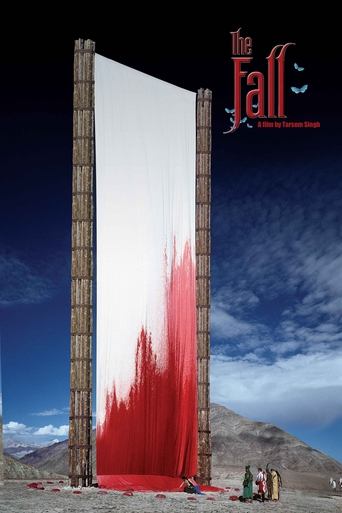
    The Fall (2006)

    Why watch next

    Both films hinge on a child's engagement with a troubled adult's story, but here the imagination is collaborative, a bridge between two lonely souls, shifting the focus from solitary escape to shared healing.

    In a 1920s Los Angeles hospital, a bedridden stuntman tells a fantastical epic to a young girl with a broken arm, weaving a story that becomes their shared escape from pain and loss. Tarsem Singh's film is a visual poem about the power of narrative to heal.

  6. Step 6

    The Secret of Kells (2009)

    Why watch next

    From live-action to animation, the theme of creating beauty as a refuge continues, but here the child's imagination is channelled into a cultural artefact, a communal act of defiance rather than a private fantasy.

    In a medieval abbey threatened by Viking raids, a young monk discovers the transformative power of illumination, venturing into the forest to find a magical crystal and complete a sacred book. The animation turns history into a luminous fable about creativity as a shield against chaos.

  7. Step 7

    Where the Wild Things Are (2009)

    Why watch next

    Both films use a child's fantasy world to process difficult emotions, but where The Secret of Kells is ordered and purposeful, this is messy and emotional, a wilder, more primal version of escape.

    A lonely boy sails to an island of giant, needy creatures who crown him king, only to find that their anger and sadness mirror his own. Spike Jonze's adaptation captures the raw emotion of Maurice Sendak's book, showing how imagination can be a place to confront, not just escape, pain.

  8. Step 8

    Beasts of the Southern Wild (2012)

    Why watch next

    The journey ends where it began: a child alone against a broken world, but Hushpuppy's imagination is not a retreat; it is a weapon, a way to face the flood and the beasts within, completing the arc from Tideland's escapism to active defiance.

    In a bayou community threatened by rising waters, a six-year-old girl with a fierce spirit believes she can tame the prehistoric beasts that emerge from the ice. Benh Zeitlin's film is a mythic portrait of a child's resilience, where imagination becomes a survival tool.