Paul Rachman's American Hardcore arrived in 2006 with a mission: to rescue the years 1979 to 1986 from the fog of nostalgia and misremembering. Working from Steven Blush's oral history, Rachman assembled interviews with Black Flag, Bad Brains, Minor Threat, SS Decontrol and the Dead Kennedys alongside rare live footage that had been passed around on VHS like contraband. The film is not a concert movie. It is a dispatch from a scene that burned hot and brief, and it understands that the documentary form, with its talking heads and grainy clips, is the only way to hold onto something that was designed to vanish.
What makes American Hardcore worth building a chain around is its honesty about the limits of the archive. The music was fast, the shows were violent, and the participants were often too young to know they were making history. Rachman lets the contradictions stand: the aggression and the camaraderie, the politics and the posturing, the regional rivalries and the shared sense of purpose. It is a film about memory as much as music, and it sets the tone for everything that follows here.
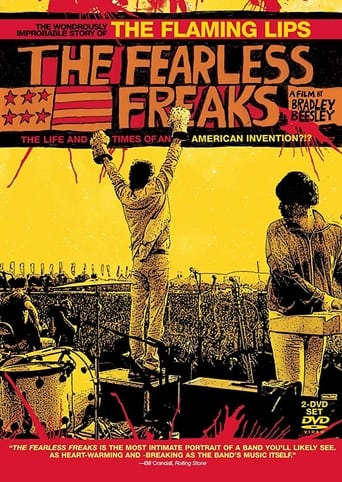
The chain moves outward from that centre in two directions. Backwards, to Penelope Spheeris's The Decline of Western Civilization, which caught the Los Angeles punk scene in 1980 with a similarly unflinching eye, and forwards through films that take the documentary impulse into different territory: the Canadian punk explosion in D.O.A., the transatlantic overview of Punk: Attitude, and the more personal, essayistic approaches of films like The Fearless Freaks and Instrument. Each one asks a version of the same question: how do you film a subculture that resists documentation?
What emerges is a portrait of punk cinema as a series of salvage operations. Some are raw and immediate, shot on whatever was available. Others are carefully constructed, using interviews and archival footage to build a narrative. Together they form a counter-history of the late twentieth century, told from the floor of the club rather than the executive suite. The chain is not exhaustive, but it is a way in, and it rewards anyone willing to listen closely to the noise.