Log in Sign up

Who Is Really Performing Here?

Ali G returns to a world of cameras and marks, and this chain follows the put-on from Staines to Tehran, asking who is really being conned when we laugh.

· ·

Twenty years after he last slumped into a West Staines leisure centre, Ali G is back, and the joke has curdled in interesting ways. Ali G: Who Iz I? sends Sacha Baron Cohen's original creation to America to reclaim his fame after discovering that Julie is eight months pregnant, which is to say it sends a fictional idiot into a real country and lets the collision do the work. What made the character durable was never the tracksuit or the mangled slang. It was the interview format: a performer playing a fool, sitting opposite people who believe they are the sane ones, and discovering which of them will say something appalling to impress a man they have decided is beneath them. The audience laughs, and then has to decide what it has just been complicit in.

That question is the spine of this programme. Baron Cohen's later work sharpens it into something closer to a weapon, and the British tradition around him has always been drawn to the put-on as a way of testing institutions. Chris Morris built an entire career on the willing dupe, and Peter Watkins made a film in which the media itself is the con. From there the chain moves outward: Orson Welles's late essay on forgery and authorship, Hirokazu Kore-eda's quiet bureaucracy of the afterlife, and Preston Sturges's con artists, who are charming enough that we forget to audit them. Each film asks the same thing in a different register. Who is holding the camera, who believes it is a mirror, and what does the laughter cost?

The ordering matters. Start with Ali G and the joke is broad and televisual; move to Four Lions and the same mechanics turn lethal, with Morris finding bathos inside terror and refusing to let the audience off with a nervous giggle. Watkins's Privilege pushes further, imagining a pop star as a state instrument, which now reads less like satire and more like a forecast. Welles then steps back to interrogate the whole apparatus, reminding us that the forger and the filmmaker share a trade. Kore-eda and Sturges close the loop from opposite ends of the emotional scale: one asks what we choose to remember, the other what we are willing to be sold.

What binds these films is not a shared tone but a shared contract. Every one of them requires the viewer to consent to being fooled, at least for ninety minutes, and then to notice the consent. That is the pleasure and the discomfort. A good put-on does not simply expose its target; it exposes the audience's appetite for the exposure. Watch them in this order and the laughter starts to sound different by the end.


Ali G: Who Iz I?
1

Ali G: Who Iz I?

2026 · dir. Sacha Baron Cohen · 89 min

Sacha Baron Cohen returns to his first and most durable creation, sending an ageing Ali G to America to reclaim his fame after learning that Julie is pregnant. The interview-format comedy remains the engine: real people, a fictional fool, and the awful things said to impress him.

Ali G: Who Iz I? → Borat: Cultural Learnings of America for Make Benefit Glorious Nation of Kazakhstan

The Link

The same performer, a decade on and a sharper edge: where Ali G ambushed interview subjects, Borat builds a whole narrative around the ambush, so the willing dupes become characters in a story they do not know they are in.

Borat: Cultural Learnings of America for Make Benefit Glorious Nation of Kazakhstan → Brüno

The Link

Borat's success gave Baron Cohen licence to push the format into open hostility, and Brüno shows the cost: the put-on becomes so aggressive that the audience's laughter is itself put on trial.

Brüno
3

Brüno

2009 · dir. Larry Charles · 83 min

A flamboyant Austrian fashion presenter descends on America in search of fame, and the film's targets turn out to be less the homophobes than the liberals who want to be seen being tolerant. The talk-show pilot sequence is a small, cruel masterpiece of entrapment.

Brüno → Four Lions

The Link

Brüno's provocation gives way to Morris's more disciplined satire, which uses the same mechanics of the fool and the straight man but refuses to let the joke stay comfortable; here the dupes are the conspirators themselves.

Four Lions
4

Four Lions

2010 · dir. Chris Morris · 97 min

Chris Morris's study of a hapless Sheffield terror cell finds genuine pathos in men who are terrible at everything except conviction. The final act's shift from farce to grief is one of the most daring tonal moves in British comedy.

Four Lions → Privilege

The Link

Morris's terrorists are amateurs improvising a performance; Watkins shows the professional version, where the put-on is organised from above and the audience is the mark on a national scale.

Privilege
5

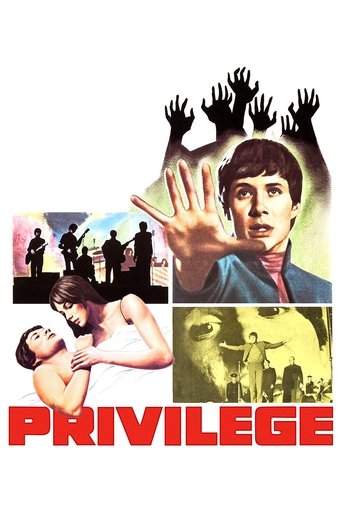
Privilege

1967 · dir. Peter Watkins · 103 min

Peter Watkins imagines a near-future Britain where a manufactured pop idol is deployed by the state to pacify the young. Shot in a pseudo-documentary register, it treats the media apparatus as the real subject and the singer as its instrument.

Privilege → F for Fake

The Link

Watkins indicts the state's use of performance; Welles turns the camera on himself and asks whether the filmmaker is any different from the con man, making the audience's complicity explicit rather than implied.

F for Fake
6

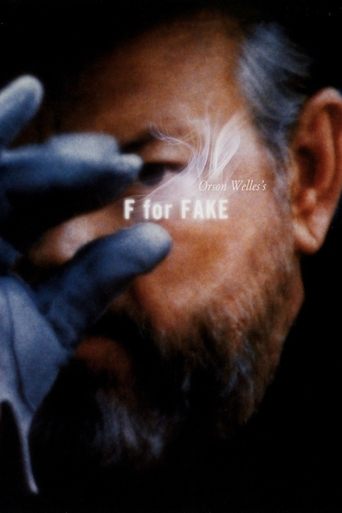
F for Fake

1973 · dir. Orson Welles · 89 min

Orson Welles's essay-film about the art forger Elmyr de Hory and the biographer Clifford Irving, assembled with sleight of hand and a mischievous grin. Welles positions himself as the greatest forger of all, and the film's final confession is both a joke and a credo.

F for Fake → After Life

The Link

Welles exposes the forger's craft; Kore-eda shows its tender use, where the willing dupe is the person choosing which version of their own life to believe, and the film crew's re-enactment is an act of care rather than theft.

After Life
7

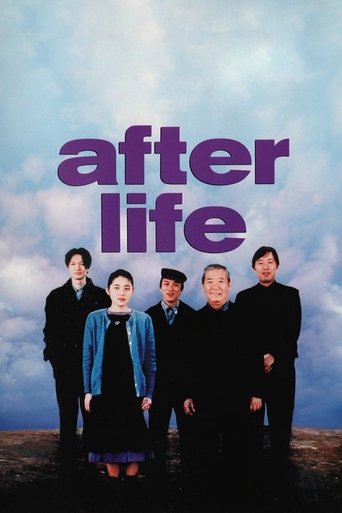
After Life

1999 · dir. Hirokazu Kore-eda · 118 min

In a way station between death and eternity, newly arrived souls are asked to choose a single memory to carry forward, and a small team of counsellors film recreations of what they select. Kore-eda's documentary-like patience makes the reconstructions quietly devastating.

After Life → The Lady Eve

The Link

Kore-eda's consolations are offered in good faith; Sturges closes the chain with the commercial con, where the mark is willing because he wants the illusion, and the comedy depends on our wanting it too.

The Lady Eve
8

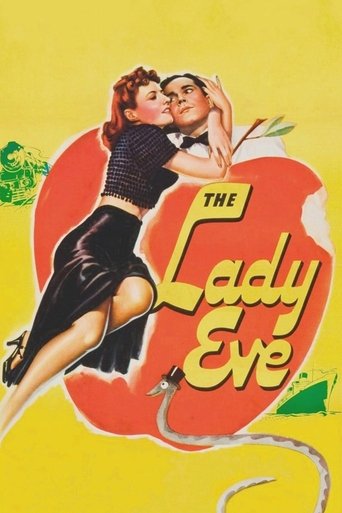
The Lady Eve

1941 · dir. Preston Sturges · 97 min

Barbara Stanwyck's card sharp sets out to fleece Henry Fonda's naive heir and falls for him instead, then returns in disguise to finish the job. Preston Sturges keeps the con light on its feet while letting the humiliation land.

Where this chain leads

Log in to leave a comment.

No comments yet.