Log in Sign up

When Slapstick Becomes Endurance Art

A chain that starts with grown men stapling themselves to each other and ends somewhere near Buster Keaton, via a Belgian postman and a man who actually ate his own shoe.

· ·

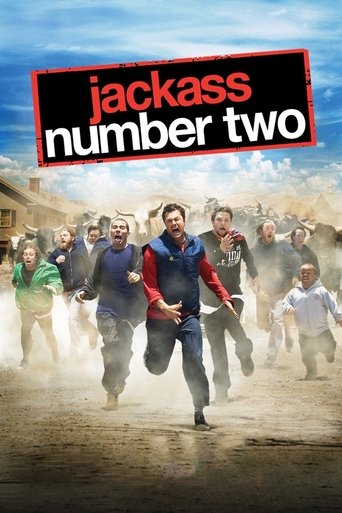
Twenty years ago this month, Jackass Number Two arrived in cinemas and made a strange kind of history. Jeff Tremaine's film has no plot, no character arcs, and no interest in the usual consolations of narrative. What it has instead is a group of grown men volunteering their bodies for humiliation, injury and the occasional genuine medical emergency, and a camera crew committed to capturing every second of it. Johnny Knoxville, Chris Pontius, Steve-O, Bam Margera and the rest raise the stakes from the first film with a dedication that sits somewhere between professional pride and religious vocation. The result is funnier than it has any right to be, and more unsettling than most horror films released that year.

The chain that follows takes that willingness seriously. Slapstick has always been a bodily art form, and the best practitioners have understood that comedy and pain share a nervous system. Buster Keaton built a career on it, taking falls that would hospitalise lesser men and keeping his face perfectly still throughout. Jacques Tati turned the body into architecture, all angles and misjudged reach. Harmony Korine's Trash Humpers pushes the same impulse into something deliberately ugly and confrontational. And then there are the performance artists, from Chris Burden to Marina Abramovic, who removed the joke entirely and kept the sacrifice.

What emerges from watching these films in sequence is a genealogy. The Jackass crew are not the heirs of Chaplin so much as the descendants of a tradition that runs through vaudeville, music hall, and the European avant-garde, where the performer's body is the material and the audience's discomfort is part of the point. The laughter does not go away. It just starts to sound different.

Jackass Number Two
1

Jackass Number Two

2006 · dir. Jeff Tremaine · 93 min

Jeff Tremaine's second Jackass feature, released twenty years ago this month, escalates the stunts to genuinely alarming territory while keeping the tone closer to a school playground than a hospital ward. The cast's commitment to self-injury as entertainment is total, and the film's refusal to moralise about it is what makes it endure.

Jackass Number Two → Jackass: The Movie

The Link

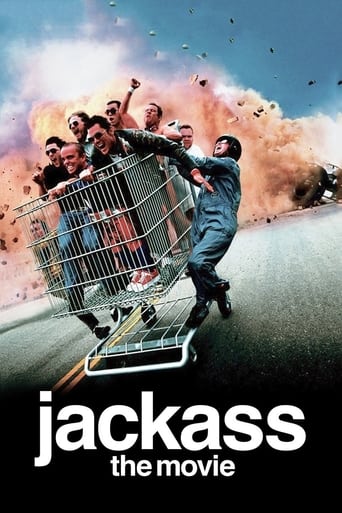
Rewinding to the first Jackass film shows how quickly the crew moved from television pranks to feature-length endurance tests. Watching the two together reveals that the escalation in Number Two was not an accident but a deliberate artistic choice.

Jackass: The Movie
2

Jackass: The Movie

2002 · dir. Jeff Tremaine · 85 min

The first Jackass feature, made for a reported five million dollars and shot largely on handheld cameras. It established the template: no plot, no safety net, and a group of friends willing to hurt themselves for a laugh. The chemistry between the cast is what lifts it above mere stunt compilation.

Jackass: The Movie → The General

The Link

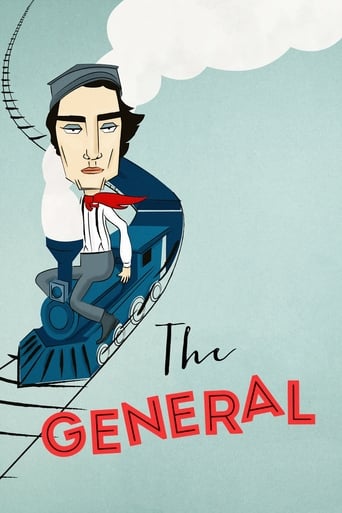
Keaton is the ancestor the Jackass crew never quite acknowledge. Where they use pain for laughs, he used pain for poetry, but the underlying bargain with the audience is identical: watch what I will do to my body for you.

The General
3

The General

1926 · dir. Buster Keaton · 79 min

Buster Keaton's masterpiece, released exactly one hundred years ago this year, in which he performs some of the most dangerous stunts of his career without a double. The famous sequence where he sits on the connecting rod of a moving train is as much a feat of physical endurance as anything in Jackass.

The General → PlayTime

The Link

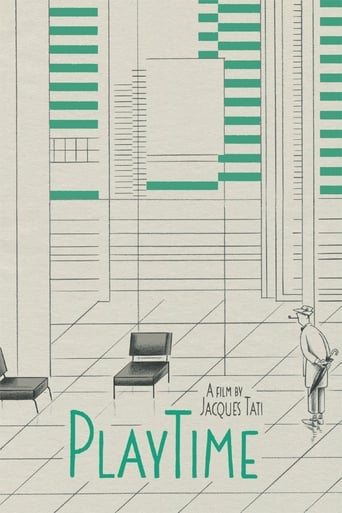
Tati takes the bodily comedy of Keaton and removes the danger, replacing it with a gentler form of endurance: the endurance of the ordinary person against a world designed for someone else. The slapstick is still there, just quieter and more melancholy.

PlayTime
4

PlayTime

1967 · dir. Jacques Tati · 115 min

Jacques Tati's most ambitious film, built on a vast set he called Tativille, in which the human body becomes a small, confused object moving through modernist architecture. The comedy comes from physical mismatch: people too large for their surroundings, gestures that miss their target, chairs that will not cooperate.

PlayTime → Trash Humpers

The Link

Korine pushes the Jackass impulse past comedy into something closer to aggression. Where the Jackass crew invite the audience to laugh with them, Korine dares you to keep watching. The sacrifice is still there, but the warmth has been stripped out.

Trash Humpers
5

Trash Humpers

2010 · dir. Harmony Korine · 77 min

Harmony Korine's deliberately abrasive film, shot on VHS and featuring a cast of masked figures who hump bins, smash televisions and cackle at nothing. It is almost unwatchable by design, and that is precisely the point. The body here is not a comic instrument but a site of deliberate degradation.

Trash Humpers → Shoot the Piano Player

The Link

Truffaut's film shows how the physical comedy of Keaton and Tati can be folded into a darker register without losing its rhythm. The pianist's body is clumsy, vulnerable and ultimately doomed, which is exactly the space Jackass occupies when the laughter stops.

Shoot the Piano Player
6

Shoot the Piano Player

1960 · dir. François Truffaut · 85 min

Francois Truffaut's second feature, in which a concert pianist hides from his past in a bar and finds himself tangled with gangsters. The film's tonal shifts, from slapstick to tragedy in a single cut, are a masterclass in using the body as a comic and pathetic object at the same time.

Shoot the Piano Player → The Act of Seeing with One's Own Eyes

The Link

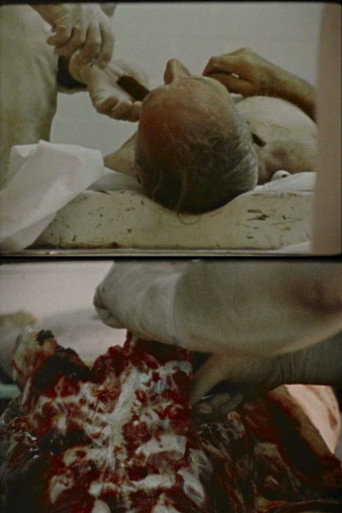
Brakhage removes the audience's permission to laugh. After the staged endurance of Jackass and Korine, this is the real thing: the body opened, the sacrifice involuntary. It is the limit case the whole chain has been circling.

The Act of Seeing with One's Own Eyes
7

The Act of Seeing with One's Own Eyes

1972 · dir. Stan Brakhage · 32 min

Stan Brakhage's silent documentary, filmed in a Pittsburgh morgue, shows autopsies in unflinching close-up. There is no comedy here, no performance, no willing sacrifice. Just the body as material, examined with the same curiosity the Jackass crew bring to their own flesh.

The Act of Seeing with One's Own Eyes → The Rehearsal

The Link

Maclean's film brings the chain full circle by returning to the question Jackass raises but never answers: where does performance end and genuine experience begin? Iti's work, like Knoxville's, depends on the audience believing that the risk is real.

The Rehearsal
8

The Rehearsal

2016 · dir. Alison Maclean · 98 min

Alison Maclean's documentary follows the New Zealand performance artist and comedian Tame Iti as he prepares a show that blurs the line between rehearsal and reality. The body is trained, marked and displayed, and the audience is never quite sure what is scripted and what is not.

Where this chain leads

Genres

  • Comedy
  • Action
  • Documentary
  • Romance
  • War
  • Horror
  • Crime
  • Thriller

Log in to leave a comment.

No comments yet.