1
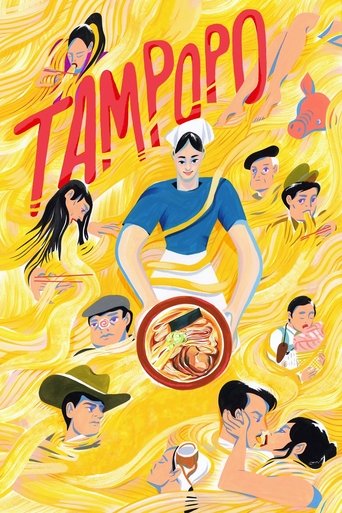
Tampopo
A truck driver and a band of helpers coach a struggling ramen shop owner toward perfection in this playful, genre-bending comedy.

Chain
From Tokyo ramen bars to Mumbai tiffin carriers, eight films that use food to map the distances between people and the places they call home.
There is a particular pleasure in watching a film where the camera lingers on a knife splitting a tomato, or a spoon carving through the surface of a custard. Food on screen does more than make you hungry; it carries the weight of memory, the ache of longing, and the quiet negotiations of identity. This chain gathers eight films from across the globe that treat cooking and eating as a language of their own, each one a doorway to a world just beyond the familiar.
We begin in Japan with Juzo Itami's 1985 comedy Tampopo, a film that treats the quest for the perfect bowl of ramen with the gravity of a samurai epic. It is a film about obsession, certainly, but also about the communal act of building something together. From there we travel to the American South, where Jon Avnet's Fried Green Tomatoes (1991) uses a shared plate of food to bridge generations and heal old wounds. The chain then crosses the Atlantic to Britain, where The Hundred-Foot Journey (2014) stages a culinary duel between a French restaurant and an Indian family's eatery, only to discover that flavour knows no borders.
Our journey continues to India, where Ritesh Batra's The Lunchbox (2013) finds romance in a misdelivered tiffin, and then to the austere kitchens of Denmark, where Babette's Feast (1987) turns a single meal into an act of grace. The mood shifts with Ang Lee's Eat Drink Man Woman (1994), a film that uses Sunday dinners to expose the fault lines in a Taiwanese family, and then to the sun-baked streets of Spain, where Pedro Almodóvar's Women on the Verge of a Nervous Breakdown (1988) finds both comedy and catharsis in a plate of gazpacho.
Finally, we land in the United States with Nora Ephron's Julie & Julia (2009), a film that pairs a 1950s cookbook with a 21st-century blogger to ask what it means to find your voice through food. Each of these films, in its own way, argues that the kitchen is not a retreat from the world but a staging ground for it. They remind us that the simplest ingredients can carry the most profound stories, and that a shared table is the shortest distance between two strangers.
A truck driver and a band of helpers coach a struggling ramen shop owner toward perfection in this playful, genre-bending comedy.
Tampopo → Fried Green Tomatoes
The Link
Where Tampopo treats food as a communal quest, this film uses the café as a site of memory and resistance, showing how a shared dish can carry the weight of a lifetime.
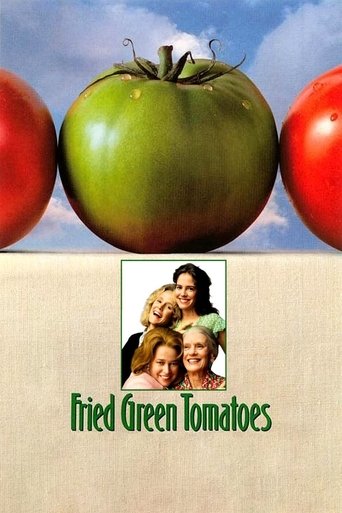
A lonely Alabama housewife finds friendship and courage through the stories of two women who ran a café in the 1920s.
Fried Green Tomatoes → The Hundred-Foot Journey
The Link
This film literalises the idea of food as a bridge between worlds, taking the small-town café of Fried Green Tomatoes and scaling it to a cross-continental clash of cuisines.
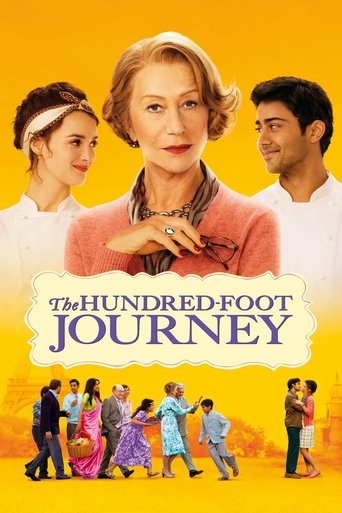
An Indian family opens a restaurant opposite a Michelin-starred French establishment, sparking a culinary and cultural standoff.
The Hundred-Foot Journey → The Lunchbox
The Link
Where The Hundred-Foot Journey turns cooking into a public competition, this film makes the meal itself a private confession, showing how a single tiffin can carry more than food.
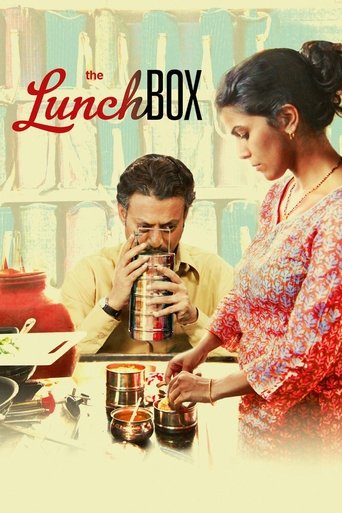
A mistaken lunch delivery sparks an epistolary romance between a lonely Mumbai housewife and a widowed office worker.
The Lunchbox → Babette's Feast
The Link
The Lunchbox finds intimacy in an everyday exchange; this film elevates a single feast to the level of sacrament, showing how generosity on a plate can redeem a closed-off community.

A French refugee cooks a lavish dinner for a puritanical Danish community, transforming their lives with a single meal.
Babette's Feast → Eat Drink Man Woman
The Link
After Babette's Feast, this film turns the meal into a weekly ritual of family negotiation, where the table becomes the stage for unspoken desires and generational shifts.
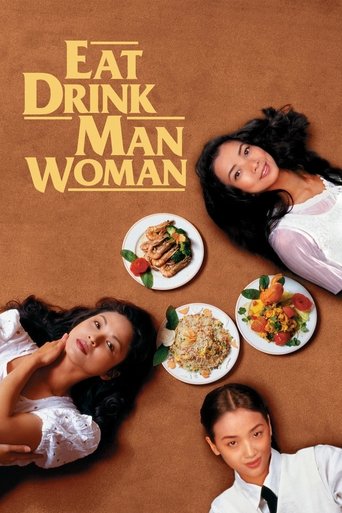
A retired Taiwanese chef and his three daughters navigate love and change through the elaborate Sunday dinners he prepares.
Eat Drink Man Woman → Women on the Verge of a Nervous Breakdown
The Link
Where Eat Drink Man Woman uses food to hold a family together, this film weaponises it, showing how a dish can become the pivot of comedy, danger, and emotional release.
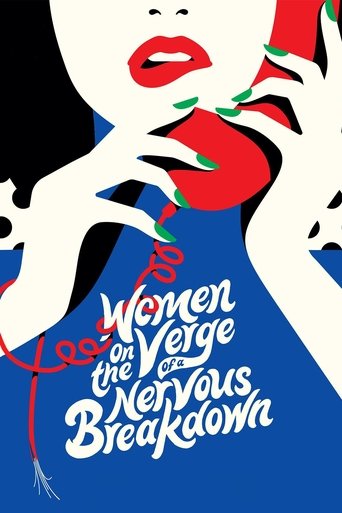
A Madrid actress's life unravels over a few chaotic days, with a batch of gazpacho laced with sleeping pills at the centre of the madness.
Women on the Verge of a Nervous Breakdown → Julie & Julia
The Link
This closing film brings the journey full circle: after the chaos of Almodóvar, it returns to the simple joy of cooking as a path to self-discovery, echoing Tampopo's belief that a perfect dish can change a life.

A young New Yorker cooks her way through Julia Child's Mastering the Art of French Cooking, while the film interweaves Child's own early years in Paris.
Related Chains
Explore
Log in to leave a comment.
No comments yet.