Kingdoms Beneath the Branches

A journey through enchanted forests where the trees have laws, the animals have grudges, and childhood is the toll at the gate. Starting with Wildwood, ending somewhere far stranger.

· ·

Laika's Wildwood arrives with a premise that sounds like comfort and behaves like a warning: Prue's baby brother is taken by a murder of crows, and the rescue pulls her and Curtis past the edge of Portland into a forest with factions, rulers and a woman called Alexandra who is not simply a villain but a power. The film's real inheritance is older than the studio's stop-motion house style. It belongs to a tradition in which the wood is a polity, not a backdrop, and a child who crosses into it is negotiating with something that has no obligation to be kind.

That is the thread this chain follows. The enchanted forest is one of cinema's most durable stages for political fable, because a wood can hold a court, a border, a class system and a food chain at once. Miyazaki understood this better than anyone, and Princess Mononoke remains the benchmark: iron towns against boar gods, no clean side, a forest that fights back with its own immune system. But the tradition is wider and stranger than the Ghibli canon. Czech stop-motion turned the fairy tale into tactile menace. British television spent the 1980s terrifying children with roots and burrows. And a handful of live-action films have treated the forest as a place where the rules of the adult world are suspended only so they can be reimposed more brutally.

Watch these in order and a pattern emerges. The journey usually begins with a disappearance and a promise, then moves through a threshold guarded by something that tests the child's manners, then into a society with its own hierarchy and its own violence. What changes between films is how much the forest is allowed to win. The gentlest entries let the child return changed but intact. The darker ones suggest the wood keeps a portion of everyone who enters, and that the politics of the place are not resolved by the hero's courage but by older, slower forces.

By the time you reach the end of this sequence, Wildwood should look less like a standalone adventure and more like a late entry in a living genre, one that has always trusted children with the truth that nature is not a playground. The trees are watching. They have been for a very long time.

Wildwood
1

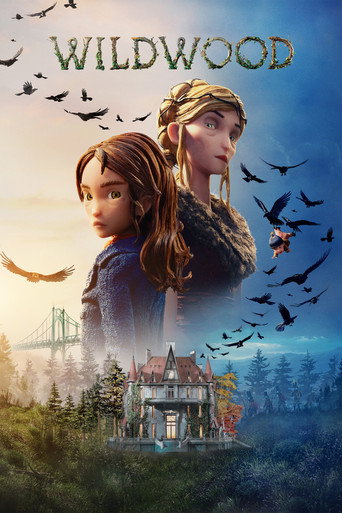
Wildwood

2026 · dir. Travis Knight · 132 min · TMDB 8.5

Laika's stop-motion adaptation of the Colin Meloy and Carson Ellis novels sends Prue and Curtis into a forest of warring factions to retrieve an abducted brother from a crow-led power called Alexandra. The studio's tactile animation gives every mossy surface and feathered antagonist a physical weight that keeps the wonder honest.

Wildwood → Princess Mononoke

The Link

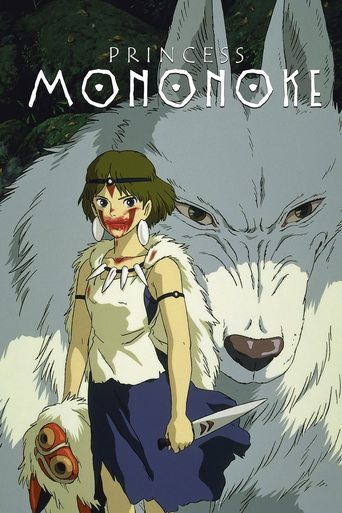
Wildwood's crow politics and contested woodland have an obvious ancestor here. Miyazaki shows what Laika's film implies: an enchanted forest with factions is a political map, and the child who enters it is a diplomat whether they like it or not.

Princess Mononoke
2

Princess Mononoke

1997 · dir. Hayao Miyazaki · 134 min · TMDB 8.3

Miyazaki's epic of iron, forest gods and a wolf-raised girl who refuses to choose between them. The action is thrilling, but the film's real achievement is moral: every faction has a case, and the forest's defence is bloody.

Princess Mononoke → The Secret of Kells

The Link

Where Mononoke is epic, Kells is intimate, and that shift matters: it shows the forest as a place of craft and memory rather than battlefield. The child's crossing is creative, not martial, which widens the genre before it darkens again.

The Secret of Kells
3

The Secret of Kells

2009 · dir. Tomm Moore · 79 min · TMDB 7.4

Tomm Moore's illuminated-manuscript fable follows a young monk into a forest where a spirit of the woods and a Viking threat press on the same small community. The flat, ornamental animation makes the wood feel drawn rather than photographed, which suits a story about stories.

The Secret of Kells → Alice

The Link

Kells treats the otherworld as a place of beauty and inheritance; Svankmajer treats it as a place of appetite. His Alice is the necessary corrective, reminding us that the fairy-tale threshold has always had teeth, and that stop-motion can make a forest feel like a trap.

Alice
4

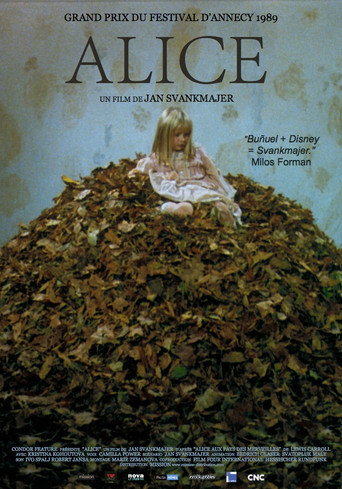
Alice

1988 · dir. Gabriel Benattar · 85 min · TMDB 7.2

Jan Svankmajer's stop-motion Alice turns Lewis Carroll into a cabinet of taxidermy and animate objects, with a live-action girl navigating a world that keeps trying to consume her. The White Rabbit is a stuffed specimen that leaks sawdust; the tea party is a lesson in bad manners.

Alice → The Company of Wolves

The Link

Svankmajer's Alice is a girl in a hostile constructed world; Carter and Jordan put a girl in a hostile natural one and make the danger explicitly adult. The move from Carroll to Carter is the genre growing up, and the forest becoming a place of desire as well as threat.

The Company of Wolves
5

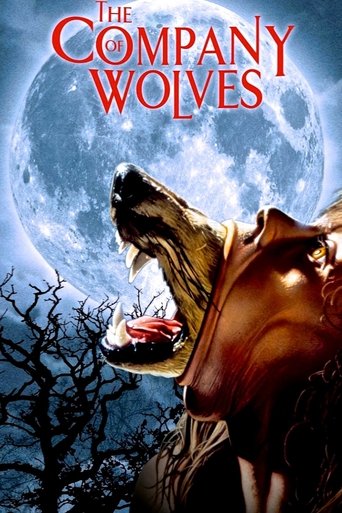
The Company of Wolves

1984 · dir. Neil Jordan · 95 min · TMDB 6.3

Neil Jordan and Angela Carter's dream-logic anthology of Little Red Riding Hood variations, in which the forest is a sexual and social wilderness and the wolf may be a gentleman. Practical transformations and a genuinely unsettling score by George Fenton.

The Company of Wolves → The Watcher in the Woods

The Link

After Carter's wolf-men, this is a return to the missing child and the forest as a site of unresolved guilt, which is precisely Wildwood's engine. The film's unevenness is part of its charm: it shows a mainstream studio trying to trust children with genuine unease.

The Watcher in the Woods
6

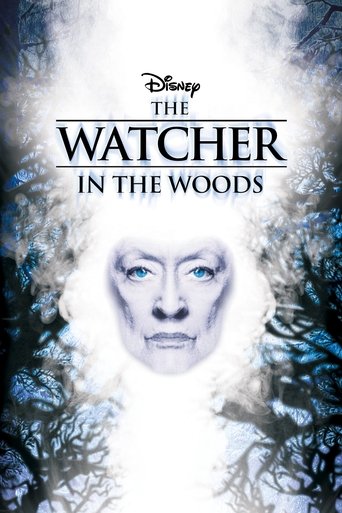
The Watcher in the Woods

1980 · dir. John Hough · 83 min · TMDB 5.9

Disney's unusually sombre British-shot chiller about an American family in a manor house beside a wood where a girl vanished decades earlier. Bette Davis lends the proceedings a severity that keeps the supernatural from becoming cute.

The Watcher in the Woods → The Enchanted Forest

The Link

The Watcher in the Woods keeps its forest at a distance; the Czech tradition puts the camera inside the undergrowth, among puppets that feel handled and alive. This is the chain's folk-art root, the source of the tactile menace that Laika now inherits.

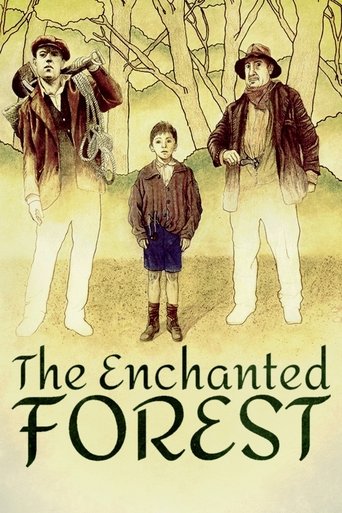
The Enchanted Forest
7

The Enchanted Forest

1987 · dir. José Luis Cuerda · 108 min · TMDB 7.0

A Czech stop-motion fairy tale in the tradition of Jiri Trnka and Karel Zeman, in which a child's journey into the woods becomes a test of kindness against a cast of carved creatures and a forest that has its own rules. The tactile puppetry gives the trees a presence that CGI rarely matches.

The Enchanted Forest → Pan's Labyrinth

The Link

The Czech puppets lead naturally to del Toro, who fuses the folk-tale forest with real political violence. Ofelia's underworld is a state with its own bureaucracy and tests, and the film closes the chain by making explicit what Wildwood only suggests: the wood's politics are the politics of the world that made it.

Pan's Labyrinth
8

Pan's Labyrinth

2006 · dir. Guillermo del Toro · 118 min · TMDB 7.8

Guillermo del Toro's Spanish Civil War fable, in which Ofelia's tasks in a labyrinth and a fig tree sit alongside the brutal reprisals of a Falangist stepfather. Doug Jones's Pale Man and the child-eating monster are only the most visible dangers.

Where this chain leads

Genres

  • Adventure
  • Fantasy
  • Animation
  • Family
  • Drama
  • Horror
  • Thriller
  • Comedy

Log in to leave a comment.

No comments yet.