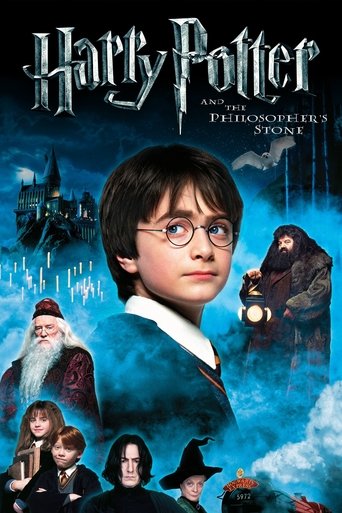
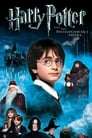
Harry Potter and the Philosopher's Stone
Columbus's adaptation turns a boy's discovery of his own worth into a piece of grand British design, with John Williams's score doing much of the emotional lifting.
Chain
From Hogwarts to the Yorkshire moors, a journey through the films that treated childhood as a serious moral adventure rather than a waiting room.
On 16 November 2001, Harry Potter and the Philosopher's Stone arrived in British cinemas and something shifted in the national imagination. Chris Columbus directed it with a steady, unfussy hand, but the film's real engine is its sense of threshold: a boy under the stairs, a letter he is not allowed to read, a platform hidden between two ordinary ones. The film trusts that a child's inner life is worth the full weight of production design, and that a school corridor can feel like a moral universe. Steve Kloves's screenplay keeps Rowling's cruelty and her warmth intact, and the moment Harry sees his parents in the Mirror of Erised carries a quiet grief that most family films would flinch from.
What that film inherits, and what this chain traces, is a distinctly British conviction that children are not decorative. The tradition runs through Ealing's wartime and postwar pictures, where children navigate adult failure with improvised courage, and through Powell and Pressburger, who imagined childhood as a place of heightened colour and genuine danger. It reaches back to Edwardian literary adaptations, where the landscape itself is a character, and forward to films that let the supernatural sit beside the domestic without fuss.
The sequence moves from Hogwarts outward into the moors, the walled garden and the bombed street. A viewer gains something from watching them in this order: the fantasy scaffolding of the Potter film starts to look less like escapism and more like a continuation of a native habit, one in which a secret world is always just behind the wardrobe or the railway embankment. The chain also pushes past the obvious titles, towards films like The Amazing Mr Blunden and The Spirit of the Beehive's British cousins, where the ghost story and the growing-up story are the same story.
British children's cinema has always been suspicious of pure whimsy. Its pleasures are earned: a train stopped by petticoats, a garden unlocked with a rusted key, a girl who talks her way out of a governess's rules. That seriousness about moral testing is what connects these eight films, and it is why they still feel alive rather than preserved.
Columbus's adaptation turns a boy's discovery of his own worth into a piece of grand British design, with John Williams's score doing much of the emotional lifting.
Harry Potter and the Philosopher's Stone → The Railway Children
The Link
From a hidden platform to a country station: both films hinge on a child discovering that the ordinary world contains a secret route to belonging, and both trust steam, coal and patience over spectacle.
Lionel Jeffries directs Edith Nesbit's story with an unhurried eye for the Yorkshire landscape, and the famous tunnel sequence still stops the heart.
The Railway Children → The Secret Garden
The Link
Where The Railway Children finds its magic outdoors in the open, Holland's film turns inward to a walled garden, showing how British cinema uses landscape to map a child's locked interior.
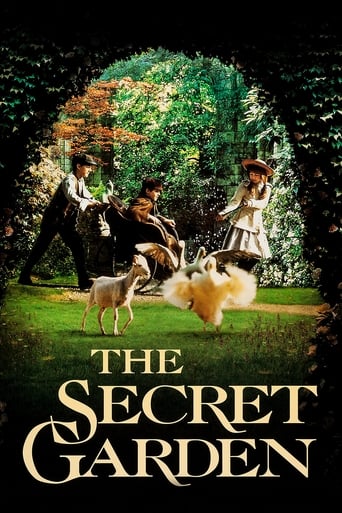
Agnieszka Holland's version is the strangest and best of the adaptations, all damp stone, creeping ivy and a child's grief treated as a force of nature.
The Secret Garden → The Amazing Mr. Blunden
The Link
The Secret Garden's restorative garden becomes a haunted house here, and the move from Holland's realism to Jeffries's uncanny period piece shows how easily British children's film slips into the supernatural.
Lionel Jeffries again, this time adapting Antonia Barber's ghost story with a genuinely unsettling time-slip plot and a fine Laurence Naismith performance.
The Amazing Mr. Blunden → A Canterbury Tale
The Link
Blunden's time-slip ghost story leads naturally to Powell and Pressburger, who made the English past feel physically present, and who gave children and young people a moral seriousness the Potter films would later inherit.
Powell and Pressburger's wartime pilgrimage follows a land girl, a soldier and an American sergeant through a Kent village where past and present keep overlapping.
A Canterbury Tale → Gone to Earth
The Link
If A Canterbury Tale shows the Archers' gentle side, Gone to Earth shows the danger in their landscape, and its vision of a childlike heroine at odds with adult authority sharpens the chain's argument about moral testing.
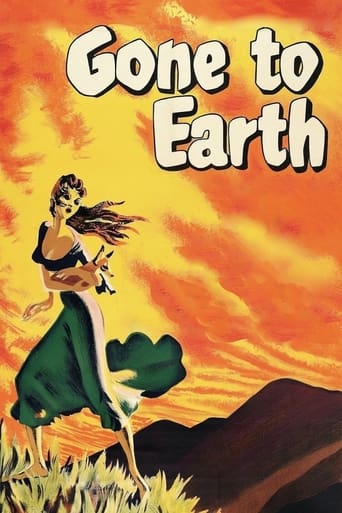
The Archers' rural melodrama, with Jennifer Jones as a wild girl caught between a fox-hunting squire and a preacher, is Powell and Pressburger at their most feverish.
Gone to Earth → Hue and Cry
The Link
Powell and Pressburger's heightened worlds give way to Ealing's bombed streets, where children are not passive witnesses but amateur detectives, and the film's comic energy keeps the chain from getting too solemn.
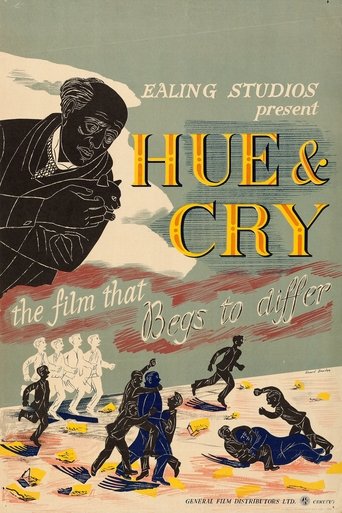
Ealing's first postwar comedy sends a gang of London boys after a criminal who hides his plans in a boys' comic, with Alastair Sim as the exasperated writer.
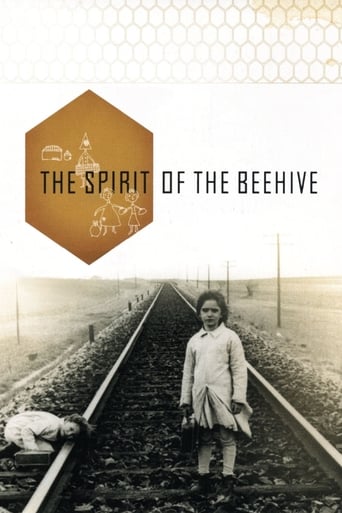
Hue and Cry → The Spirit of the Beehive
The Link
Ealing's boys solve a crime; Erice's girls invent a mythology, and the leap to Spain closes the chain by showing how far the British tradition's core idea, that a child's imagination is a serious moral faculty, can travel.
Victor Erice's Castilian masterpiece follows two sisters through a village haunted by Frankenstein, and Ana Torrent's performance is one of cinema's great portraits of a child's inner life.
Related Chains
Explore
Log in to leave a comment.
No comments yet.