Sid and Nancy
Cox's raw, tender portrait of Sid Vicious and Nancy Spungen's final months, with Oldman and Webb at full incandescent throttle. The definitive punk love story, unflinching about the damage and the devotion.
Chain
From the Sex Pistols' collapse to the quiet ache of post-punk, a chain of films where rebellion and romance burn together, and the fallout is everything.
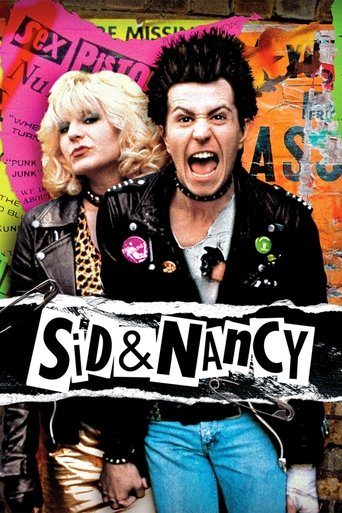
January 1978. The Sex Pistols are falling apart on a disastrous American tour, and Sid Vicious is being separated from the only person who seems to understand him. Alex Cox's Sid and Nancy is not a rock biopic in any conventional sense; it is a portrait of a love so consuming that it becomes a suicide pact. Cox films their spiral with a mix of tabloid grime and genuine tenderness, and Gary Oldman and Chloe Webb give performances that feel less like impersonation and more like possession. The film refuses to look away from the ugliness, yet it never loses sight of the fragile, desperate affection at the centre. It remains the definitive screen statement on punk's emotional underbelly: the movement that screamed against the world often had nothing left for the people inside it.
This chain begins there, with that specific, self-destructive intensity, and then follows the thread outward. What happens when rebellion is not just an aesthetic but a way of loving? These films share a DNA: they are set against punk and post-punk scenes, but they are not really about the music. They are about the people who use the noise to drown out their own quiet devastation. The settings shift from London's squats to Manchester's grey terraces, from Berlin's divided streets to the American Midwest, but the emotional weather is constant. These are stories of people who find each other in the margins, and who then have to survive what they have found.
Each step in this sequence refracts the Sid and Nancy dynamic through a different lens. Some films keep the self-destruction front and centre, others trace the quieter aftermath, and a few find a strange, bruised hope in the wreckage. What unites them is a refusal to sentimentalise. The romance is never clean, never easy, and the punk backdrop is never just set dressing. The safety pins and the leather jackets are armour, and these films are about what happens when the armour comes off. They ask a question that Sid and Nancy poses with brutal clarity: can two broken people build something that is not just a shared collapse?
Order matters here. Starting with Cox's film establishes the template: the chaotic, co-dependent, ultimately fatal bond. From there, the chain moves to a film that feels like a direct heir, then to a British classic that reworks the same material with a different emotional temperature. The middle stretch introduces a European perspective that treats the scene with more distance, and a documentary that grounds the myth in everyday reality. The final films pull back further, showing how the punk spirit lingers in quieter, more ambiguous forms, until we arrive at a work that suggests the cycle might, just possibly, be broken.
What rewards the patient viewer is not a single thesis but a cumulative ache. These films, watched in sequence, form a kind of elegy for a moment when music promised to change everything and often changed nothing at all, except the people who lived through it. They are also, against all odds, love stories. Not the kind that end with a kiss in the rain, but the kind that leave scars. If you have ever loved something that was bad for you, or been young and angry and convinced that the world owed you more, this chain will feel less like a programme and more like a mirror. It is a journey through the dark, with occasional flashes of light.
Cox's raw, tender portrait of Sid Vicious and Nancy Spungen's final months, with Oldman and Webb at full incandescent throttle. The definitive punk love story, unflinching about the damage and the devotion.
Sid and Nancy → The Great Rock 'n' Roll Swindle
The Link
Where Sid and Nancy gives the doomed couple a tragic intimacy, Temple's collage shows the circus they were trapped in, the machine that chewed them up. Watch it to see the world that made their love so desperate.
Julien Temple's chaotic, anti-documentary account of the Sex Pistols' rise and fall, built from the band's own footage and McLaren's provocations. A fractured, unreliable memory of the same scene, told from the inside out.
The Great Rock 'n' Roll Swindle → Jubilee
The Link
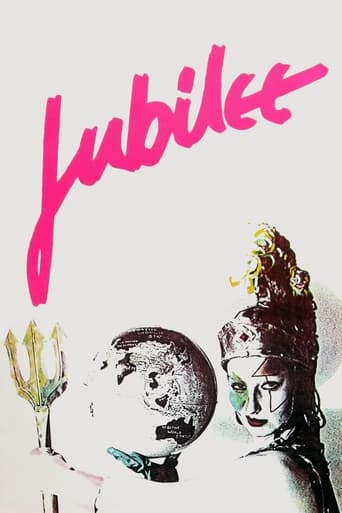
Jarman's film shares Sid and Nancy's punk milieu but pushes it into allegory. Where Cox finds tragedy in individuals, Jubilee sees a whole culture burning, making the personal collapse feel like part of a larger conflagration.
Derek Jarman's punk fantasia sends Queen Elizabeth I forward to a London ruled by nihilistic youths. A deliberately messy, provocative vision of punk as both apocalypse and liberation.
Jubilee → Control
The Link
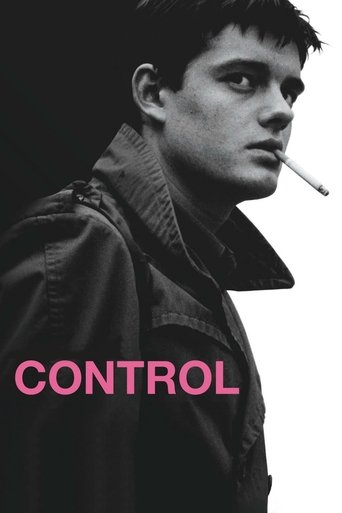
Curtis's story rhymes with Vicious's: the pressure of a band, the pull of two women, the sense of being trapped. But Corbijn's film is quieter, more interior, trading Cox's chaos for a slow, inevitable drift toward the dark.
Anton Corbijn's monochrome portrait of Ian Curtis, the Joy Division frontman who found fleeting connection with Annik Honoré before his suicide. Sam Riley's Curtis is a study in stillness and suppressed voltage.
Control → 24 Hour Party People
The Link
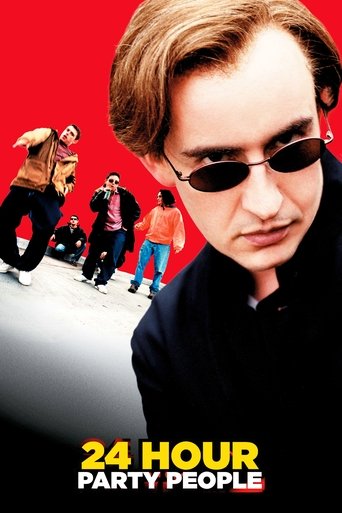
After Control's solemnity, Winterbottom offers a wry, self-aware look at the same post-punk landscape. It reframes the tragedy as part of a larger, absurdist story, where the music matters more than the mess.
Michael Winterbottom's shaggy, fourth-wall-breaking account of Manchester's music scene from punk to Madchester, anchored by Steve Coogan's Tony Wilson. A comic, affectionate whirlwind that never loses sight of the casualties along the way.
24 Hour Party People → The Punk Singer
The Link
Hanna's story offers a different kind of rebellion: not self-destructive but self-making. Where Sid and Nancy end in annihilation, this film shows punk as a lifeline, a way to build a self and a community.
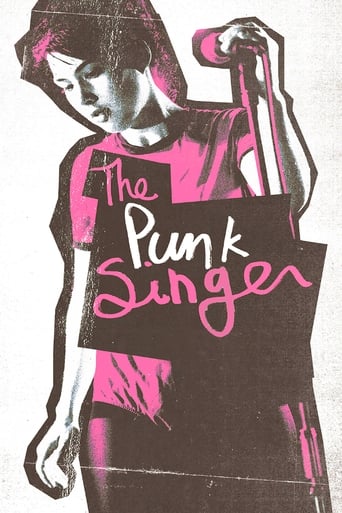
Sini Anderson's documentary on Kathleen Hanna, frontwoman of Bikini Kill and Le Tigre, tracing her journey from riot grrrl to activist and back. A vital corrective to punk's male-dominated history.
The Punk Singer → The Doom Generation
The Link
Araki takes the punk attitude and transplants it to mid-90s America, replacing the music scene with a media-saturated void. The result is a more abstract, more ironic version of the Sid and Nancy dynamic, where love and violence are indistinguishable.
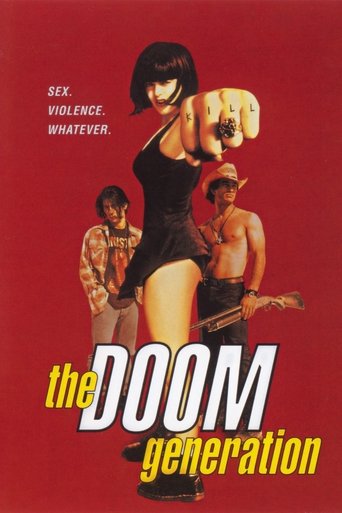
Gregg Araki's hyper-stylised road movie follows two lovers and a drifter on a violent, erotic spree through a consumerist wasteland. A nihilistic, queer-inflected take on the doomed trio.
The Doom Generation → The Lure
The Link
From the gritty realism of punk's London to this glittering, grotesque fantasy, the chain ends on a note of strange hope. The mermaids' story echoes the earlier films' themes of consuming love and self-destruction, but Smoczyńska's world allows for transformation, however painful.
Agnieszka Smoczyńska's genre-defying musical about two mermaid sisters who join a nightclub band in Warsaw. A surreal, bloody fairy tale about the price of love and the impossibility of belonging.
Related Chains
Explore
Log in to leave a comment.
No comments yet.