Log in Sign up

The Melodrama They Never Let Us Keep

Rachel Morrison's Love of Your Life arrives as a reminder: the woman's picture was never a lesser form. It was grief, desire and colour, and the Europeans knew it first.

· ·

Rachel Morrison spent years shaping light for other people's stories, and in Love of Your Life she turns that eye on a romance that curdles into something harder. Margaret Qualley plays Maya, whose chance meeting opens into a sweeping affair and then, abruptly, into loss. What follows is not recovery so much as reorganisation: a woman learning to live beside an absence. Morrison understands that the woman's picture was never soft-headed. It was a commercial genre built to hold the things mainstream cinema preferred to keep off-screen, and she films it with the seriousness it always deserved.

The chain that follows traces that seriousness back to its sources. Douglas Sirk pushed the form to its limits in the 1950s, using Technicolor and mirrors to expose the cruelty inside American comfort, and Todd Haynes rebuilt Sirk's grammar in Far from Heaven to show how much of it was always about race and sexuality as well as class. David Lean, working in Britain, found the same pressure in restraint: Brief Encounter is a melodrama of unspoken desire, its poetry made from timetables and tea. Max Ophuls, exiled and working across Europe and Hollywood, gave the form its most elegant fatalism, and Letter from an Unknown Woman remains the genre's purest statement of love as something remembered rather than possessed.

Watch them in this order and a through-line appears. Each film treats feeling as structure, not decoration. Sirk's compositions carry the argument his dialogue cannot say aloud; Haynes borrows that visual language and turns it into historical critique; Lean strips it to a glance across a railway platform; Ophuls lets the camera glide through time as if memory itself were a tracking shot. Morrison inherits all of it. Her film sits at the end of a lineage that Hollywood once dismissed as women's weepies and European directors never did, and it earns its place there.

This is a chain about grief and desire, and about the visual grammar that makes both bearable. It rewards patience. Let the colours do their work.

Love of Your Life
1

Love of Your Life

2026 · dir. Rachel Morrison · 106 min

Rachel Morrison's romance follows Maya, played by Margaret Qualley, from a chance encounter into a sweeping affair and then into sudden loss. What could be a weepie becomes something more exacting: a study of a woman rebuilding a life around an absence.

Love of Your Life All That Heaven Allows

The Link

Morrison's film inherits Sirk's central problem: a woman whose desire is treated as a social emergency. Where she films grief directly, Sirk films its containment, and the contrast sharpens both.

All That Heaven Allows
2

All That Heaven Allows

1955 · dir. Douglas Sirk · 89 min

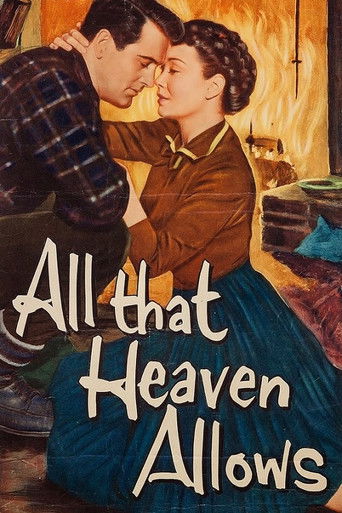
Douglas Sirk's widowed Cary Scott falls for her younger gardener and finds her children, her neighbours and her own living room turned against her. The famous television set, delivered as a consolation prize, is one of cinema's cruellest images.

All That Heaven Allows Imitation of Life

The Link

If All That Heaven Allows shows Sirk exposing the suburbs, Imitation of Life shows him widening the frame to race and class. The two together establish the genre's full ambition before Haynes picks it up.

Imitation of Life
3

Imitation of Life

1959 · dir. Douglas Sirk · 125 min

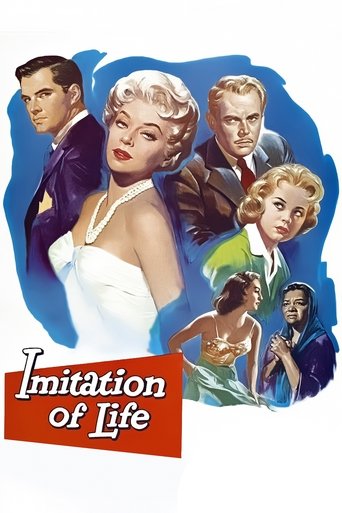
Sirk's final Hollywood film sets a white actress's stardom against her Black housekeeper's life, and against the daughter who passes for white. The staircase funeral is melodrama operating at full orchestral volume.

Imitation of Life Far from Heaven

The Link

Haynes is the bridge between Sirk and Morrison: he proves the melodrama's visual grammar can carry contemporary critique without irony. Watching him after Sirk shows how deliberate that grammar always was.

Far from Heaven
4

Far from Heaven

2002 · dir. Todd Haynes · 107 min

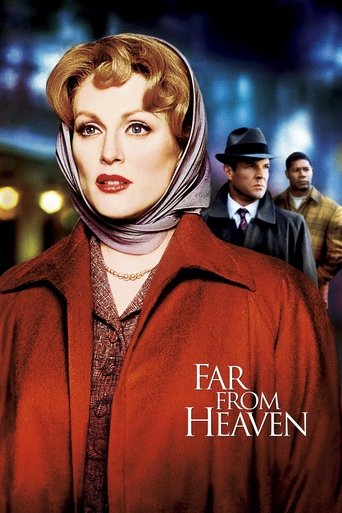
Todd Haynes restages Sirk's world in 1957 Connecticut, with Julianne Moore's Cathy discovering her husband's sexuality and her own attraction to a Black gardener. Elmer Bernstein's score and Edward Lachman's autumnal palette do half the storytelling.

Far from Heaven Brief Encounter

The Link

Haynes's film is lush and American; Lean's is austere and British, and the pairing reveals that the genre's power lies in what it withholds. Where Sirk colours, Lean withholds, and both break your heart.

Brief Encounter
5

Brief Encounter

1945 · dir. David Lean · 86 min

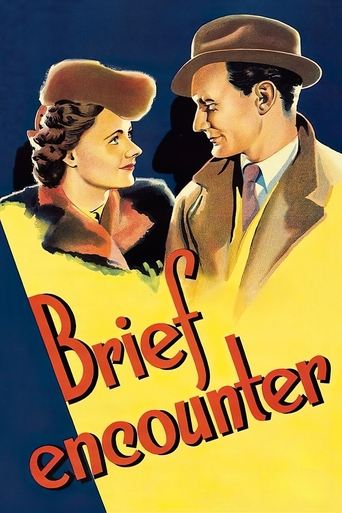
David Lean's tale of two married people who meet in a railway station buffet and nearly, but never quite, change their lives. Celia Johnson's voiceover and Rachmaninoff's second piano concerto turn restraint into devastation.

Brief Encounter Letter from an Unknown Woman

The Link

Lean's lovers part at a station; Ophuls's heroine never truly arrives. The move from British restraint to Viennese fatalism deepens the chain's argument that melodrama is about time and what it takes from us.

Letter from an Unknown Woman
6

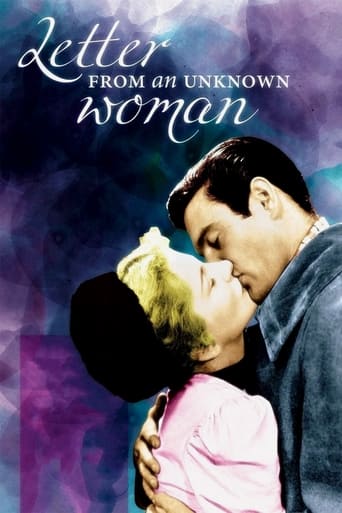
Letter from an Unknown Woman

1948 · dir. Max Ophüls · 87 min

Max Ophuls follows Lisa from adolescent infatuation with a pianist to a lifetime of loving him from a distance. The camera moves like memory itself, and the final letter reframes everything you have watched.

Letter from an Unknown Woman The Earrings of Madame de...

The Link

Having seen Ophuls's fatalism in Letter, this second film shows his method at its most crystalline: objects circulating, desire deferred, the camera never still. It is the purest expression of the visual grammar Morrison now inherits.

The Earrings of Madame de...
7

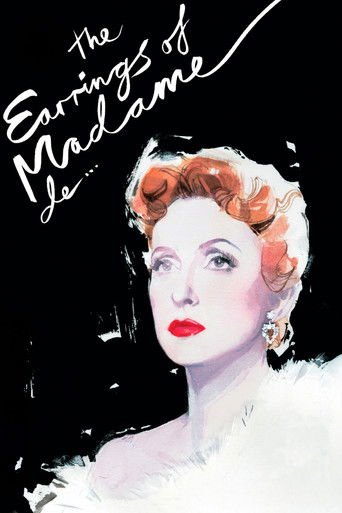
The Earrings of Madame de...

1953 · dir. Max Ophüls · 105 min

Ophuls tracks a pair of earrings through sale, gift, loss and return as a marriage quietly collapses. Danielle Darrieux's performance is all surface, which is exactly where the pain lives.

The Earrings of Madame de... Ali: Fear Eats the Soul

The Link

The chain began with Sirk's widow and her gardener; Fassbinder strips away the Technicolor and finds the same wound. Ending here shows the melodrama is not a period style but a living form, still being remade by filmmakers who take it seriously.

Ali: Fear Eats the Soul
8

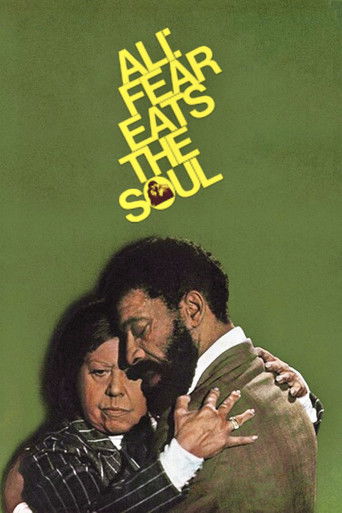
Ali: Fear Eats the Soul

1974 · dir. Rainer Werner Fassbinder · 93 min

Rainer Werner Fassbinder reworks All That Heaven Allows as the story of a widowed cleaning woman and a younger Moroccan worker in Munich. The flat, unglamorous images make the social cruelty harder to look away from.

Where this chain leads

Log in to leave a comment.

No comments yet.