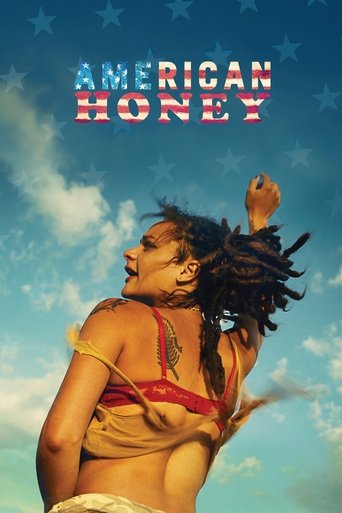
American Honey (2016) opens with Star, a teenager so desperate to leave her cramped trailer life that she climbs into a van full of strangers selling magazine subscriptions across the Midwest. Andrea Arnold's film is a sensory immersion: the thrum of rap music, the glare of gas station forecourts, the fleeting intimacy of a motel room. It captures the road as both a physical and emotional escape, a place where identity can be shed and remade. Arnold shoots in a boxy 4:3 ratio, as if the frame itself is a cage that the characters are constantly trying to break out of. The film's genius is that it never lets us forget the cost of this freedom: the hustles are grimy, the camaraderie is conditional, and the open road is also a landscape of dead ends.
This chain follows that impulse, tracing the road as a means of escape from stifling circumstances. Each film features characters who hit the highway to leave behind their pasts, seeking freedom and self-discovery. But the road is not a simple solution. It is a space of possibility and peril, where the promise of reinvention collides with the weight of what you carry. The sequence moves from the raw, youthful energy of American Honey to a series of journeys that test the very idea of escape, culminating in a film that questions whether such escapes can ever be sustainable.
The First Exits
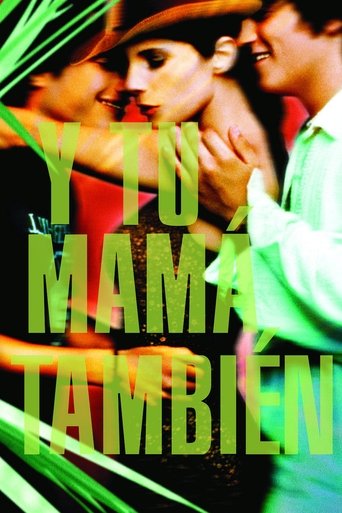
From American Honey, the chain moves to Y Tu Mamá También (2001), a film that shares Arnold's love for the messy, tactile experience of travel. Alfonso Cuarón's road movie follows two teenage boys and an older woman as they drive through rural Mexico, their journey a mix of hedonism and unspoken grief. The connection is in the physicality: the dust, the heat, the cramped car, the way the landscape presses in on the characters. Both films use the road as a space where social rules loosen, and where desire and class tensions simmer beneath the surface. Cuarón's long takes and handheld camera echo Arnold's observational style, creating a sense of immediacy that makes the characters' escapes feel both exhilarating and precarious.
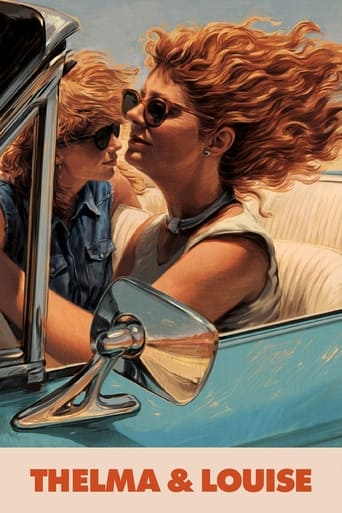
The next step is Thelma & Louise (1991), the most iconic escape in American cinema. Ridley Scott's film takes the road as a literal flight from the law, but it's also an escape from the confines of domesticity and patriarchy. Thelma and Louise's journey is a radical act of self-definition, and their final drive into the Grand Canyon is a defiant refusal to be captured. This film amplifies the stakes of American Honey: where Star's escape is tentative and ambiguous, Thelma and Louise's is a full-throated rebellion. The connection is in the way both films use the road to explore female friendship and the limits of freedom. Scott's sweeping vistas and Hans Zimmer's score give the journey a mythic quality, but the film never loses sight of the cost.
Detours and Dead Ends
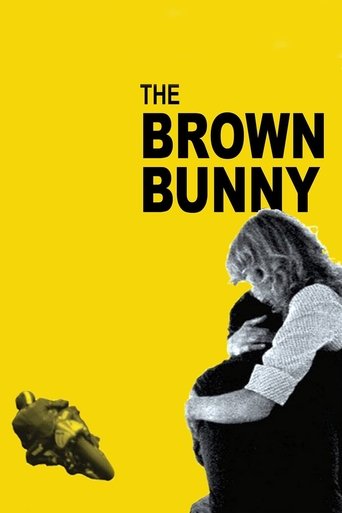
From Thelma & Louise, the chain detours into the surreal with The Brown Bunny (2003), Vincent Gallo's polarising road film. It follows a motorcycle racer driving across America, haunted by a lost love. This is a more internal journey, a road trip as a form of grief work. The connection to Thelma & Louise is in the way both films use the road as a space for confronting the past, but Gallo's film is quieter, more abstract. The long, unbroken shots of highways and motel rooms create a trance-like state, and the film's infamous final scene is a raw confrontation with memory. The Brown Bunny challenges the viewer to find meaning in the emptiness, a fitting bridge to the more experimental films that follow.
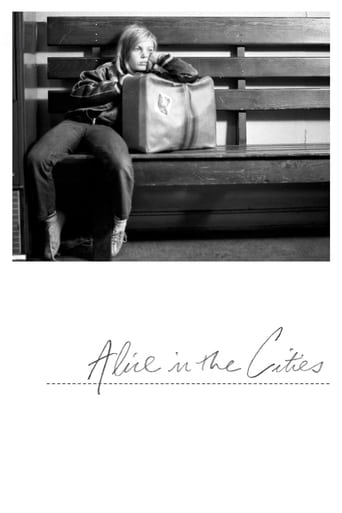
Next, the chain turns to Alice in the Cities (1974), Wim Wenders' early masterpiece. A German journalist and a young girl travel across the United States, searching for the girl's grandmother. This is a road film about the impossibility of truly escaping your past, as the journalist's own rootlessness mirrors the girl's displacement. The connection to The Brown Bunny is in the shared sense of drift and the search for connection. Wenders' black-and-white photography captures the American landscape as a series of transient images, and the film's quiet melancholy is a counterpoint to the more volatile emotions of the previous films. It's a reminder that the road can also be a place of loneliness and uncertainty.
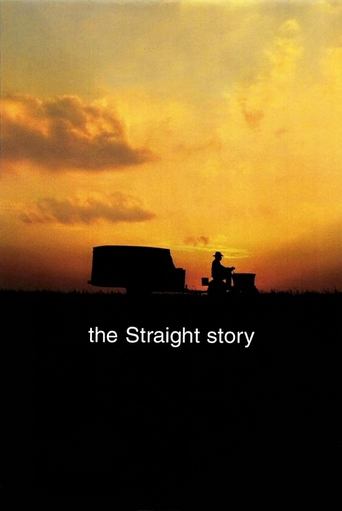
From Alice in the Cities, the chain moves to The Straight Story (1999), David Lynch's most uncharacteristic film. An elderly man drives a lawnmower across Iowa and Wisconsin to reconcile with his estranged brother. This is a road film about the limits of escape: the journey is slow, deliberate, and ultimately about returning to family rather than fleeing it. The connection is in the way both films use the road as a means of processing the past, but Lynch's film is a gentle, humane counterpoint to Wenders' existential drift. The film's pacing forces the viewer to slow down, to appreciate the small moments, and to consider that freedom might not be about distance but about acceptance.
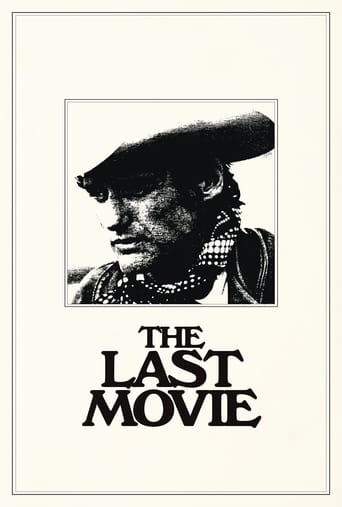
The chain then turns to The Last Movie (1971), Dennis Hopper's follow-up to Easy Rider. A film crew leaves behind a Peruvian village, and the locals begin to re-enact the violent scenes they've witnessed. This is a road film that questions the very idea of escape: the crew's departure is not a liberation but a disruption, and the villagers' imitation suggests that the road leaves traces that cannot be erased. The connection to The Straight Story is in the way both films deal with the aftermath of a journey, but Hopper's film is more chaotic, more critical. The Last Movie is a difficult, fragmented work, but it's a vital part of this chain because it challenges the romanticism of the road.
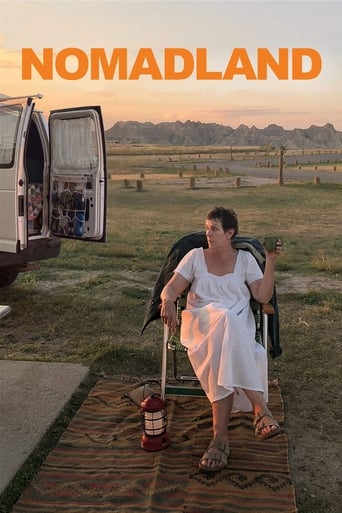
Finally, the chain concludes with Nomadland (2020), Chloé Zhao's portrait of a woman who lives in a van, moving between seasonal jobs across the American West. This is the culmination of the escape narrative, but it's also a meditation on its impossibility. Fern's freedom is real, but it's born of loss and economic precarity. The connection to The Last Movie is in the way both films show the road as a site of both liberation and exploitation. Zhao's film is a documentary-inflected fiction that refuses easy answers, and its final image of Fern driving off into the desert is both hopeful and elegiac. It asks whether the road can ever be a home, or whether it's just a way of postponing the reckoning.
This chain is not a simple celebration of the open road. It's a journey through the many ways we try to escape, and the ways the road shapes us, for better and worse. From the reckless energy of American Honey to the quiet resignation of Nomadland, these films remind us that the road is never just a path to somewhere else. It's a mirror, reflecting our desires and our fears. And sometimes, the best we can do is keep driving.