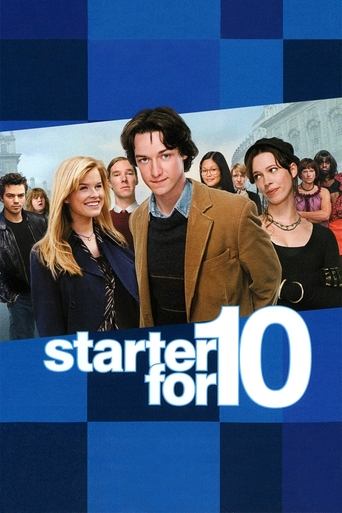
Starter for 10
Brian Jackson, a working-class scholarship boy, arrives at Bristol University in 1985, where his love of knowledge and his dreams of University Challenge collide with the realities of class, sex, and friendship.
Chain
From the dreaming spires of Cambridge to the redbrick campuses of the provinces, a journey through the British university film and what it reveals about class, education, and desire.
Starter for 10 (2006) catches Brian Jackson at the precise moment his life splits in two. A scholarship boy from Essex, he arrives at Bristol in 1985 with a head full of quotations and a heart set on University Challenge, the television quiz that promised to turn his encyclopaedic knowledge into something like belonging. Tom Vaughan's film, adapted from David Nicholls's novel, understands that for a generation of bright, awkward young men, the university was not just a place to study. It was a stage on which class, desire and self-invention collided, often painfully.
This chain takes that collision as its subject. It moves from Brian's redbrick anxieties to the older, more rarefied corridors of Cambridge in Maurice, where E.M. Forster's Edwardian undergraduates discover that the price of love is often silence. It follows the arc of British higher education on screen, from the post-war certainties of Lucky Jim to the Thatcher-era reckonings of Another Country, and on to the present day, where the academy has become a battleground of ideals and identities. Along the way, the chain finds room for the anarchic girls of St Trinian's, whose gleeful destruction of authority offers a necessary counterpoint to all that earnest striving.
What unites these films is a question that Starter for 10 poses with particular tenderness: what is education for? Is it a ladder to be climbed, a privilege to be guarded, or a space in which to discover who you might become? The films gathered here offer different answers, but they share a conviction that the university is never merely a backdrop. It is a crucible, and the students who pass through it emerge changed, for better or worse.
Brian Jackson, a working-class scholarship boy, arrives at Bristol University in 1985, where his love of knowledge and his dreams of University Challenge collide with the realities of class, sex, and friendship.
Starter for 10 → The History Boys
The Link
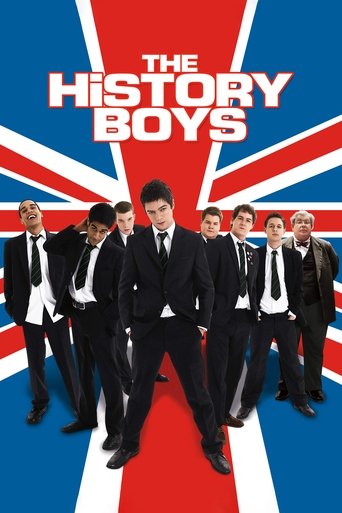
Like Starter for 10, this film centres on a scholarship boy's quest for academic glory, but where Brian's journey is individual, The History Boys examines the collective pressure and ethical compromises involved in chasing a place at Cambridge or Oxford.
A group of bright, working-class sixth-formers in 1980s Sheffield are coached for Oxbridge entrance by two teachers with radically different philosophies, exposing the tensions between learning for its own sake and learning as a means to an end.
The History Boys → Lucky Jim
The Link
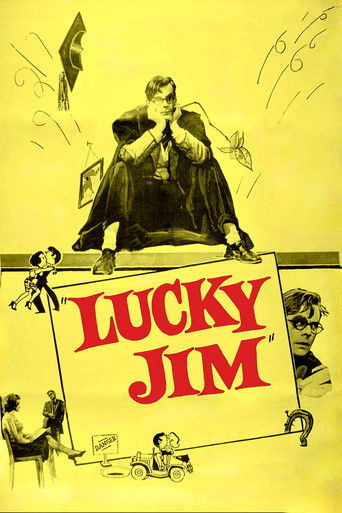
Kingsley Amis's Jim Dixon is a precursor to Brian Jackson: a grammar-school boy navigating the class-bound world of academia, but thirty years earlier and with a sharper, more cynical edge. This film roots the theme in the post-war expansion of higher education.
Jim Dixon, a young lecturer at a provincial redbrick university, struggles to keep his job while satirising the pretensions of his pompous professor and the absurdities of academic life.
Lucky Jim → Maurice
The Link
Maurice moves the chain from the comic provincialism of Lucky Jim to the rarefied, homoerotic atmosphere of Cambridge, where the university's beauty and tradition become a prison for a young man's sexuality, a theme Starter for 10 touches on only glancingly.
At Cambridge at the turn of the century, Maurice Hall falls in love with a fellow student, but the repression of Edwardian society forces him to choose between conformity and his own nature.
Maurice → Another Country
The Link
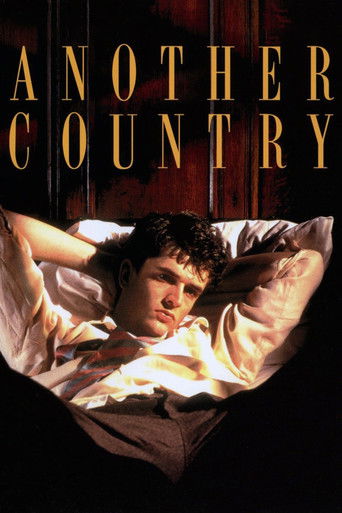
Where Maurice ends with a glimmer of hope, Another Country shows the brutal consequences of discovery. Its school, not a university, but the connection to Maurice is direct: both explore how elite educational institutions police desire and produce political outsiders.
In an English public school in the 1930s, a brilliant but rebellious student, Guy Bennett, is expelled for homosexuality, an experience that shapes his later defection to Moscow.
Another Country → The Belles of St Trinian's
The Link
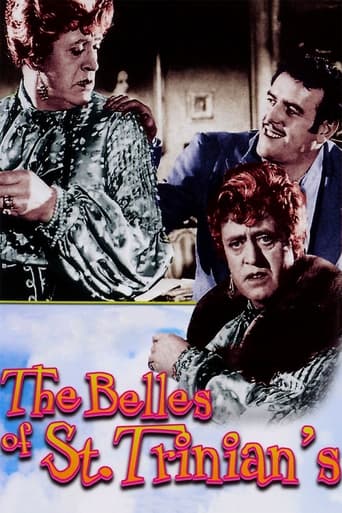
After the earnest struggles of the previous films, this comedy offers a gleeful inversion: the students are not striving for acceptance but actively sabotaging the system. It reminds us that the British education film has always had a subversive streak.
The anarchic girls of St Trinian's school, led by the irrepressible daughters of the headmistress, wreak havoc on a school trip to a horse race, undermining all authority in their path.
The Belles of St Trinian's → The Oxford Murders
The Link
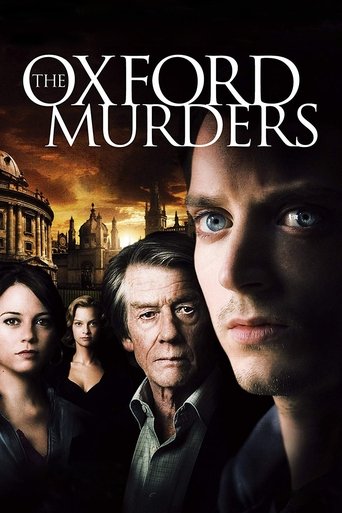
This thriller transplants the university setting into the genre of the murder mystery, showing how the cloistered world of academe can breed obsession and intellectual rivalry, a darker extension of the competitive spirit seen in Starter for 10.
A postgraduate student at Oxford becomes entangled in a series of murders that seem to follow a mathematical pattern, while his mentor, a reclusive logician, plays a dangerous game of wits.
The Oxford Murders → The Riot Club
The Link
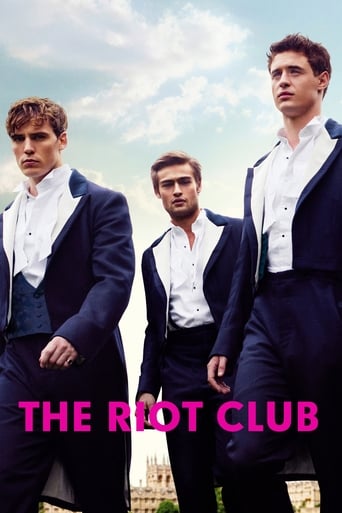
The Riot Club brings the chain full circle, showing what happens when the class anxieties of Starter for 10 curdle into entitlement. It is the brutal, contemporary answer to the question of what Oxford and Cambridge really produce.
Two Oxford freshmen are invited to join an exclusive dining club whose members embody privilege, excess, and casual cruelty, leading to a night of violence that exposes the rot at the heart of the elite.
Related Chains
Explore
Log in to leave a comment.
No comments yet.