The Road
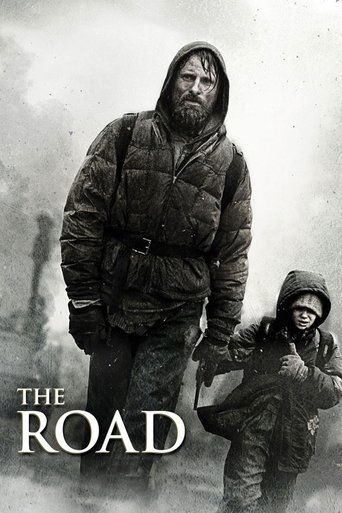
A father and son push a shopping cart through a grey, ash-covered America, scavenging for food and evading cannibal gangs. Viggo Mortensen's performance is a study in exhausted devotion.
Chain
From a father's vigil to a robot's devotion, eight films trace the fragile threads that hold humanity together when the world falls quiet.
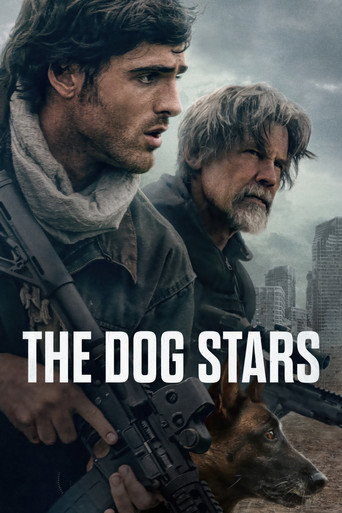
Ridley Scott's film adaptation of The Dog Stars finds its cinematic kin in a collection of movies that share its specific pulse: the tension between vast, empty horizons and the intimate instinct to protect what remains. Scott grounds Peter Heller's world in visceral texture, contrasting the quiet routine of a solitary pilot with the sudden threat of an unspooling world. This viewing chain follows that same thread, tracing how cinema captures human resilience, companionship, and fragile hope amidst collapse.
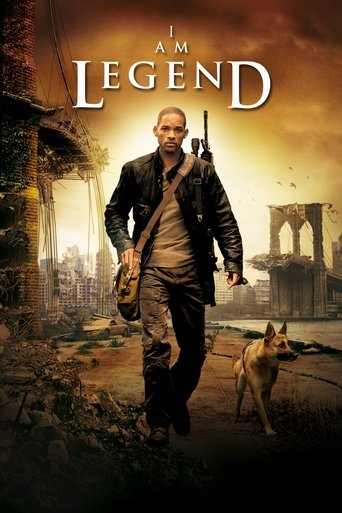
We begin with The Road, the grim baseline of the genre. John Hillcoat's film is a study in the grammar of survival: the push of a cart, the rationing of hope, the father's body as the last shield between his son and the abyss. It is the film that asks the hardest question, and its answer is not comfort but commitment. From that stark opening, the chain moves to I Am Legend, where Will Smith's Robert Neville patrols an empty Manhattan with his German Shepherd, Sam, as his only tether to sanity. The bond between man and dog here is not sentiment; it is a lifeline, and the film's famous opening hunt through the tall grass is a masterclass in how a single companion can make desolation bearable.
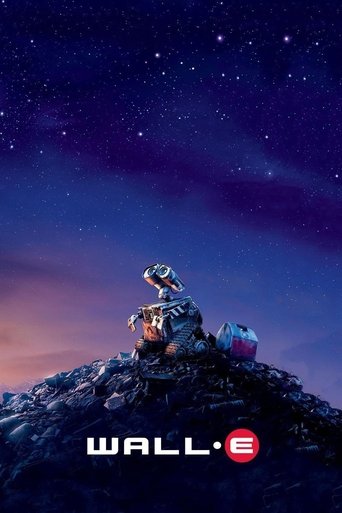
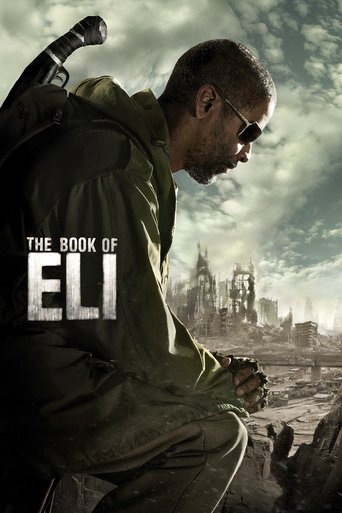
Then the register shifts. Wall-E is a love story told in beeps and silhouettes, a robot who finds a plant in the dust and a partner in a sleek probe named EVE. It is the chain's most hopeful turn, but it earns that hope by first showing us a planet reduced to a landfill, and a humanity that has forgotten how to walk. The Book of Eli follows, a road movie dressed as a gospel, with Denzel Washington carrying a Bible across a burnt America. It is a film about the cargo we carry when the maps are gone, and about the difference between a weapon and a text.
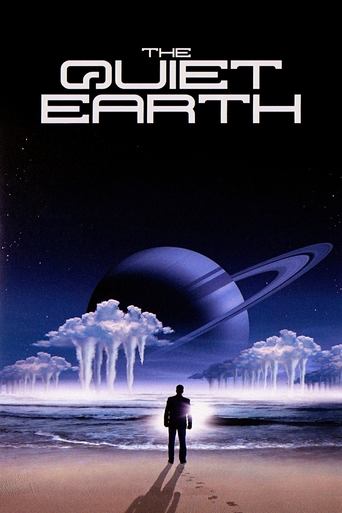
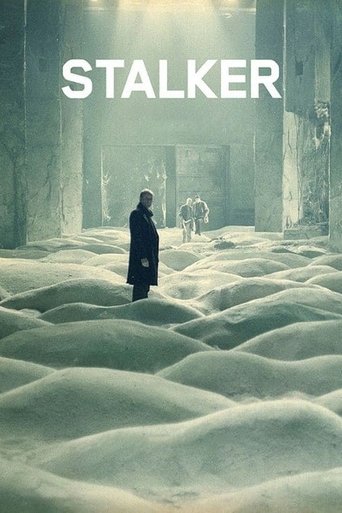
But the chain does not stop at the obvious landmarks. It detours through The Quiet Earth, a New Zealand oddity where a man wakes to find everyone gone, and his loneliness is so total that the film becomes a meditation on the self as the last territory. It pauses at The Road Warrior, where Mad Max's leather and fury are undercut by the feral child he protects, a reminder that even the most hardened survivor carries a spark of the human. And it ends with Stalker, Tarkovsky's slow, sacramental walk through the Zone, where the destination is not a place but a question. These films share a grammar: the long shot of a figure crossing a ruined horizon, the close-up of a hand gripping a tool or a paw, the sound of wind where a city used to be.
What unites them is not despair but the refusal to let despair have the last word. Each film, in its own register, argues that survival is not merely endurance but a form of attention, a way of noticing the green shoot in the ash, the melody in the static, the warmth of a body beside you in the dark. The Dog Stars understands this, and so does this chain. Watch them in order, and you will see the genre not as a catalogue of catastrophes but as a gallery of small graces. The world ends, again and again, and still we reach for each other. That is the signal this chain picks up, and it is worth following.
A father and son push a shopping cart through a grey, ash-covered America, scavenging for food and evading cannibal gangs. Viggo Mortensen's performance is a study in exhausted devotion.
The Road → I Am Legend
The Link
From the father-son dyad of The Road, we move to another pair adrift in a dead city. Neville and Sam share the same primal need: to protect one another from the dark, and their daily rituals of survival echo the father's patient care.
Robert Neville, the last man in New York, hunts deer in abandoned avenues and talks to mannequins, with only his dog Sam for company. The bond between them is the film's quiet heart.
I Am Legend → WALL·E
The Link
Where Neville's isolation is broken by tragedy, Wall-E's is broken by curiosity. The robot's devotion to a single green shoot mirrors the father's protection of his son, and the film's leap into space expands the question: what do we carry when we leave the Earth behind?
A trash-compacting robot on a deserted Earth finds a plant, then a purpose, when a sleek probe named EVE arrives. The first half is a silent comedy of loneliness among the skyscrapers of refuse.
WALL·E → The Book of Eli
The Link
After Wall-E's hopeful rescue, we return to the road. Eli is a wanderer like the father in The Road, but his cargo is not a child; it is a book. The film interrogates what we preserve and why, and its final revelation redefines the value of the text.
Eli walks west across a post-apocalyptic America, carrying a Bible he believes will restore humanity. Denzel Washington's performance is a study in quiet conviction, and the film's twist reframes the entire journey.
The Book of Eli → The Quiet Earth
The Link
Eli walks through ruins with a purpose; Hobson drifts through them without one. This New Zealand film strips away the mission and leaves only the solitude, asking what happens when the audience for your survival disappears.
A scientist wakes to find himself seemingly the last person on Earth, and his slow exploration of an empty New Zealand is both eerie and meditative. The film's final shot is one of the genre's great enigmas.
The Quiet Earth → The Road Warrior
The Link
The Quiet Earth is a film of stillness; The Road Warrior is a film of motion. Max's leather-clad cynicism is the direct descendant of Hobson's bewilderment, but the feral child he protects reconnects the chain to the father-son bond of The Road.
Max, a burnt-out cop, is drawn into a battle between a refinery community and a gang of marauders in the Australian wasteland. The film is a masterclass in practical action and world-building.
The Road Warrior → Stalker
The Link
From the high-octane chase of The Road Warrior, we descend into the Zone. The Stalker's role is not to fight but to lead, and his faith in the Room echoes Eli's faith in the book. Both films ask what we are willing to risk for a hope we cannot verify.
A guide leads two men through the Zone, a mysterious restricted area where a room is said to grant one's deepest wish. Tarkovsky's film is a slow, philosophical pilgrimage through rust and water.
Stalker → The Dog Stars
The Link
The Stalker's journey into the Zone finds its echo here: a man, a dog, and a plane instead of a train and a guide. This film, the chain's anchor, gathers all the threads, the bond with an animal, the search for meaning, the small beauty of a sunrise over the mountains, and lands them in a story of hope that is hard-won and never simple.
A pilot and his dog live in a hangar by an airport, scavenging for supplies and flying a small plane over a plague-ravaged Colorado. When a mysterious radio signal beckons, he sets out to find the source.
Related Chains
Explore
Log in to leave a comment.
No comments yet.