Contagion
Soderbergh's clinical thriller follows a global pandemic from patient zero to vaccine, weaving together the frantic work of scientists, the spin of politicians, and the chaos of the public.
Chain
From Contagion's clinical dread to the surreal end of days, a chain of films about outbreaks, science, and the fraying of society.
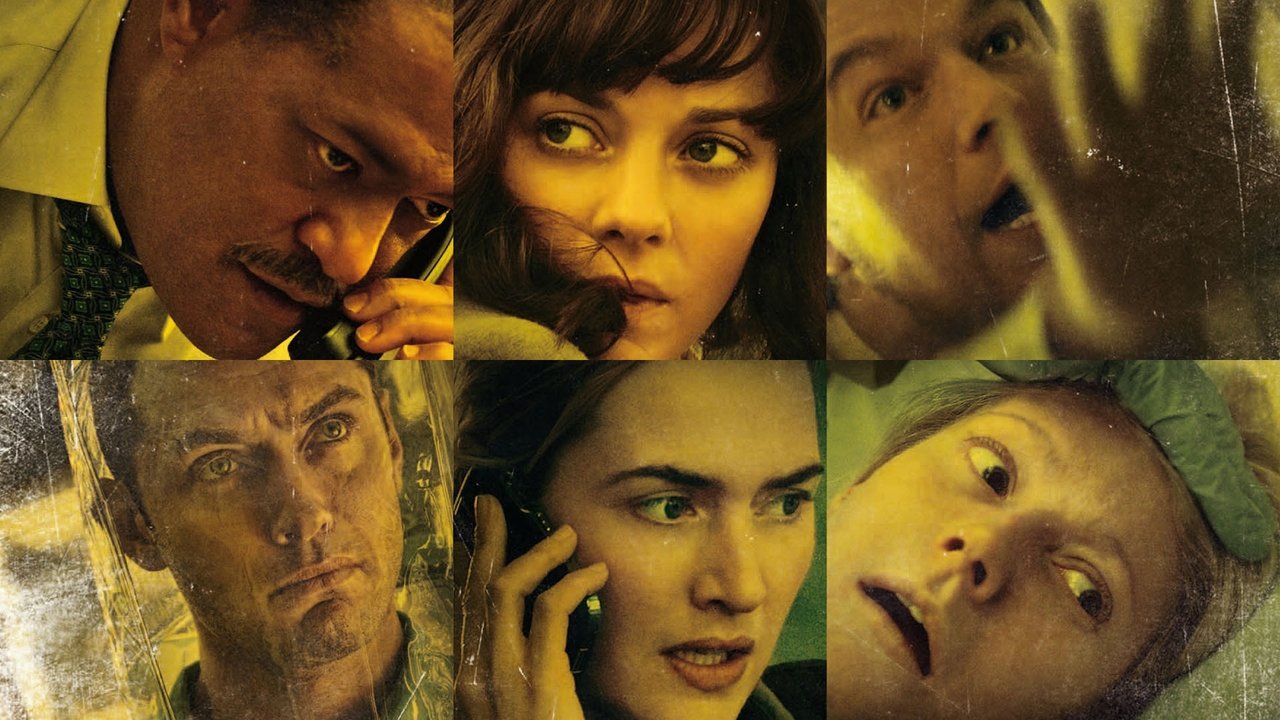
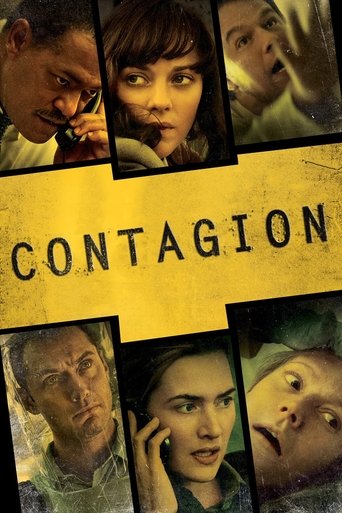
Contagion (2011) opens not with a bang but with a cough. Steven Soderbergh's coolly precise thriller maps the global spread of a lethal virus with the detachment of an epidemiologist's chart, yet its true subject is the panic that outruns the pathogen. As the MEV-1 virus leaps from handshake to handshake, Soderbergh cuts between a WHO investigator tracing transmission chains, a CDC doctor scrambling for a vaccine, and a conspiracy blogger whose fearmongering becomes its own contagion. The film's power lies in its refusal to moralise: science is fallible, governments are compromised, and the ordinary citizen is left to decide whom to trust.
This chain takes Contagion as its anchor and radiates outward to films that share its obsession with the intersection of science, politics, and human behaviour under existential threat. Each title interrogates a different facet of the outbreak narrative: the bureaucratic paralysis of the CDC, the ethics of quarantine, the collapse of social order, and the stubborn persistence of hope. Together they form a conversation about how societies fracture when the invisible enemy arrives, and how individuals navigate the rubble of institutions that were meant to protect them.
The journey begins with The Andromeda Strain (1971), Robert Wise's meticulous adaptation of Michael Crichton's novel, where a team of scientists in an underground lab races to identify a space-borne pathogen. It moves through the paranoid 1990s of 12 Monkeys (1995), where memory and madness blur in a plague-ravaged future, and culminates in Children of Men (2006), Alfonso Cuarón's vision of a world where humanity itself has become sterile. Along the way, we encounter the quiet desperation of a village doctor in a smallpox outbreak, the bureaucratic horror of a government cover-up, and the surreal logic of a pandemic that rewrites reality.
What binds these films is not just their shared premise of disease, but their insistence that the real catastrophe is human. Whether it is the cold calculus of a military scientist, the paranoia of a conspiracy theorist, or the quiet heroism of a nurse who stays at her post, each film asks what remains of our humanity when the systems we built fail. They are not simply disaster movies; they are mirrors held up to our own anxieties about science, authority, and the fragile bonds that hold society together.
Soderbergh's clinical thriller follows a global pandemic from patient zero to vaccine, weaving together the frantic work of scientists, the spin of politicians, and the chaos of the public.
Contagion → The Andromeda Strain
The Link
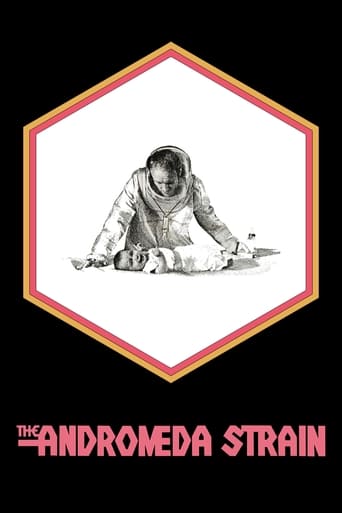
Where Contagion shows a modern, networked response to outbreak, The Andromeda Strain offers its Cold War precursor: a top-secret lab, a five-stage decontamination protocol, and the same tension between scientific rigour and human fallibility.
Robert Wise's adaptation of Michael Crichton's novel sees a team of scientists in a sealed underground facility race to identify a deadly extraterrestrial microorganism before it escapes.
The Andromeda Strain → The Seventh Seal
The Link
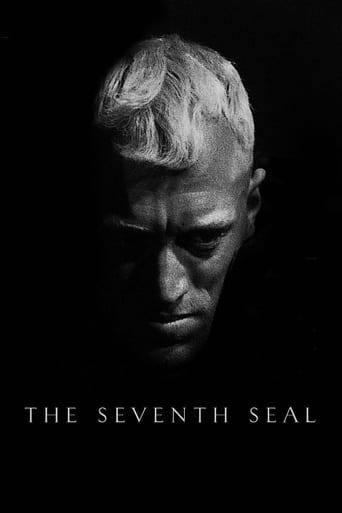
The plague in The Seventh Seal is not a modern biosafety crisis but a divine scourge, yet it shares Contagion's vision of a society undone by fear and superstition, where the individual must find meaning amid the dying.
Bergman's medieval allegory follows a knight who plays chess with Death while the plague ravages his land, forcing him to confront faith, doubt, and the meaning of existence.
The Seventh Seal → The Plague
The Link
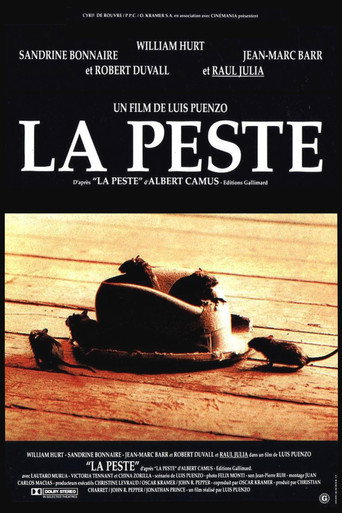
From Bergman's medieval knight we move to a modern doctor in a quarantined city, echoing Contagion's focus on the ethical choices of medical professionals, but here the enemy is not just the bacillus but the complacency of the authorities.
Luis Puenzo's adaptation of Camus's novel transplants the allegory to a South American city under quarantine, where a doctor's quiet resistance becomes a moral stand against indifference.
The Plague → Twelve Monkeys
The Link
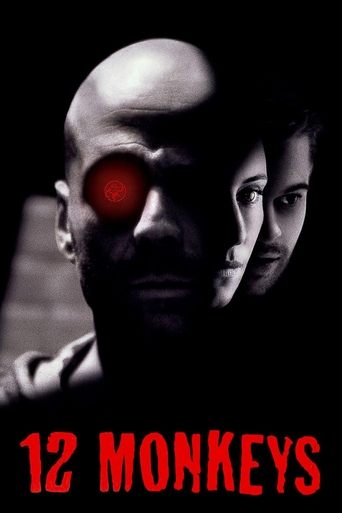
Where Contagion's timeline is linear and scientific, 12 Monkeys fractures it: the outbreak is a given, and the question is whether the past can be changed, or whether the individual is merely a pawn in a larger, inescapable pattern.
Gilliam's time-travel dystopia sends a convict from a plague-ravaged future to the present to uncover the origin of the virus that wiped out most of humanity, blurring memory and madness.
Twelve Monkeys → Blindness
The Link
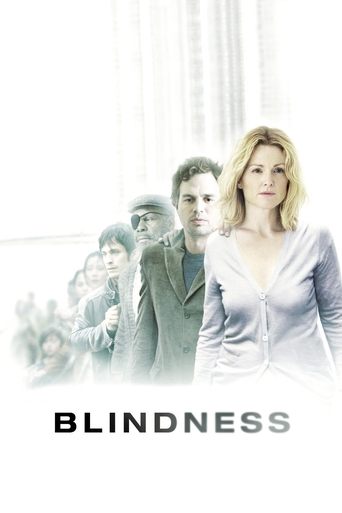
If 12 Monkeys questions the reliability of the witness, Blindness removes sight altogether: the epidemic here is not lethal but blinding, and the film's horror lies in how quickly social contracts dissolve when people cannot see, echoing the breakdown of trust in Contagion.
Fernando Meirelles's adaptation of Saramago's novel depicts a city struck by a mysterious epidemic of white blindness, and the descent into savagery that follows as the infected are quarantined in an asylum.
Blindness → Children of Men
The Link
The disease in Children of Men is infertility, a slow extinction rather than a sudden outbreak, but it shares Contagion's concern with the political response to existential threat: the state's control, the refugee crisis, and the flicker of hope carried by a single individual.
In a near-future Britain where humanity has been sterile for two decades, a disillusioned bureaucrat is tasked with escorting the first pregnant woman to safety amid civil collapse.
Related Chains
Explore
Log in to leave a comment.
No comments yet.