Log in Sign up

Machines That Open the Wrong Doors

A chain of films where scientists build devices to widen the mind and find something with teeth waiting on the other side. Practical effects, saturated colour and sound design do the terrible work of making the interior visible.

· ·

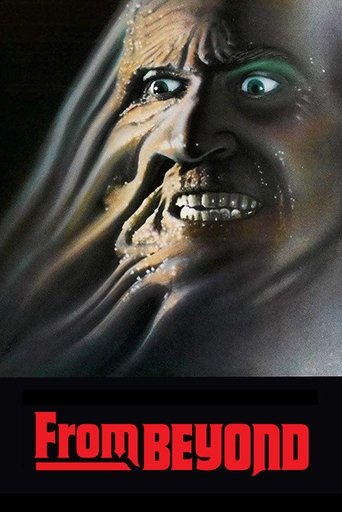
Stuart Gordon's From Beyond (1986) is the purest version of a very specific nightmare: the scientist who believes the mind can be expanded by machinery, and the machine that answers back. Dr Pretorius's Resonator stimulates the pineal gland, and what it reveals is not enlightenment but a parallel dimension of hungry, pulsing things. The film is gleeful and disgusting in equal measure, and its practical effects (the pineal stalk, the melting bodies, the flesh-eating swarm) do something no CGI could: they make the invisible anatomy of the mind into latex and lubricant and light. Released in the same year as Aliens and The Fly, it belongs to a moment when horror decided the body was the most frightening special effect of all.

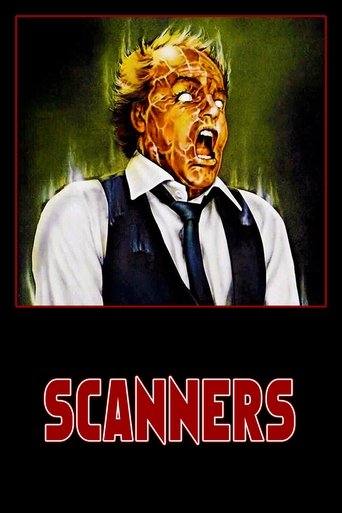
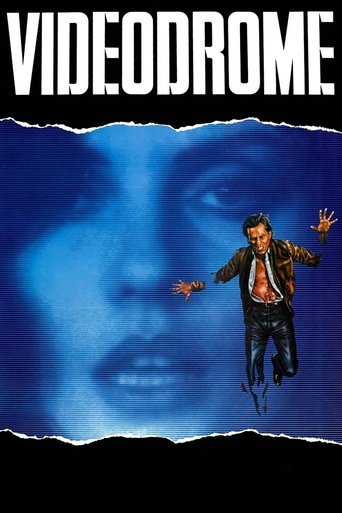
The chain that follows takes that premise seriously. David Cronenberg is the presiding spirit, and his Scanners (1981) and Videodrome (1983) are the twin pillars: in the first, a drug-induced telepathy becomes a weapon and a medical catastrophe; in the second, a television signal grows a tumour in the viewer's brain. Ken Russell's Altered States (1980) pushes the same idea into sensory-deprivation mysticism, with William Hurt's scientist regressing physically as his consciousness expands. These are not films about monsters from space; they are films about the mind as a place with a geography, and the horror of discovering that geography is inhabited.

What binds the sequence is craft. The colour palettes are aggressive (the hospital green of From Beyond, the cold steel of Scanners, the amniotic reds of Altered States), the sound design hums and throbs like a machine under load, and the effects teams worked in rubber, foam and blood. The result is a kind of visible thinking, the interior made monstrous. Later entries in the chain, from the gooey satire of Society to the digital-body anxieties of Possessor, show that the tradition never died; it just changed tools.

Watch these in order and you can trace a lineage: the machine as forbidden door, the body as its unwilling laboratory, and the practical effect as the only honest way to show what happens when the door stays open.

From Beyond
1

From Beyond

1986 · dir. Stuart Gordon · 85 min

Stuart Gordon's lurid adaptation of Lovecraft, in which a resonator machine awakens the pineal gland and lets something slither through. Jeffrey Combs and Barbara Crampton commit fully, and the practical effects are still astonishingly wet.

From Beyond → Scanners

The Link

From Beyond's resonator is a machine that opens the mind; Cronenberg's scanner drug does the same chemically, and both films treat expanded perception as a medical disaster with a body count.

Scanners
2

Scanners

1981 · dir. David Cronenberg · 103 min

Cronenberg's cold, clinical thriller about telepaths created by a pharmaceutical experiment, culminating in a head explosion that remains a benchmark of practical effect work. Michael Ironside's Darryl Revok is a terrifying study in weaponised consciousness.

Scanners → Altered States

The Link

Where Scanners uses a drug to unlock telepathy, Altered States uses isolation tanks and tribal ritual; both follow a scientist who becomes his own experiment, and Russell's psychedelic imagery pushes the interior further into the visible.

Altered States
3

Altered States

1980 · dir. Ken Russell · 103 min

Ken Russell's hallucinatory take on John Lilly's sensory-deprivation research, with William Hurt's scientist regressing into a primal state. The sound design and Dick Smith's makeup effects make the mind's interior a physical place.

Altered States → Videodrome

The Link

Altered States locates the monstrous inside the mind; Videodrome makes the medium itself the machine, turning a television signal into a bodily growth. The chain moves from laboratory apparatus to the screen in your living room.

Videodrome
4

Videodrome

1983 · dir. David Cronenberg · 88 min

Cronenberg's media-nightmare, in which a pirate television signal induces a brain tumour that manifests as a fleshy slit in the stomach. James Woods's transformation is a masterclass in deadpan horror, and the practical effects are still stomach-churning.

Videodrome → The Fly

The Link

Videodrome's flesh-reality fusion becomes literal here: a machine (the telepod) rewrites the body, and the horror is in the slow, intimate decay rather than the jump scare.

The Fly
5

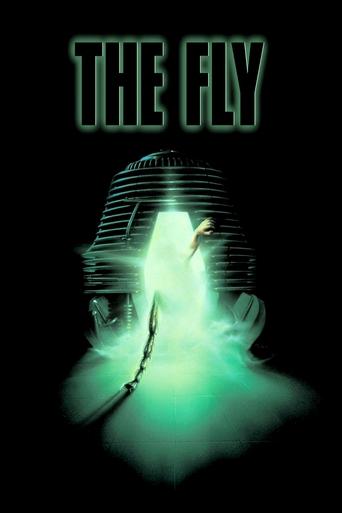
The Fly

1986 · dir. David Cronenberg · 96 min

David Cronenberg's remake, with Jeff Goldblum as a scientist whose teleportation experiment goes wrong. The gradual, agonising metamorphosis is rendered in Chris Walas's practical effects, and the film's tragedy is as potent as its gore.

The Fly → Society

The Link

The Fly's intimate bodily horror is scaled up to a social metaphor in Society, where the machine is privilege itself and the effects are gleefully, grotesquely practical.

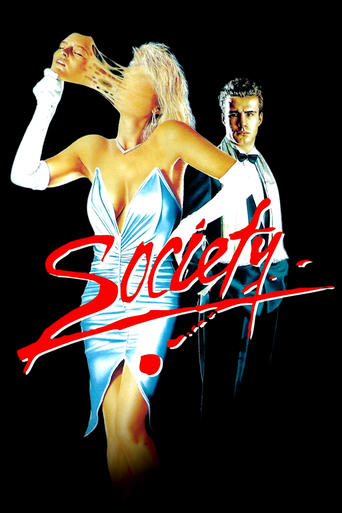
Society
6

Society

1990 · dir. Brian Yuzna · 100 min

Brian Yuzna's satirical body-horror about a teenager who discovers his wealthy family are not what they seem. The infamous 'shunting' finale, designed by Screaming Mad George, is a riot of latex and bad taste.

Society → Tetsuo: The Iron Man

The Link

Society's fleshy excess meets its opposite in Tetsuo's metallic body horror; both use practical effects to make the body alien, but Tsukamoto's film is a machine-age nightmare of rust and wire.

Tetsuo: The Iron Man
7

Tetsuo: The Iron Man

1989 · dir. Shinya Tsukamoto · 67 min

Shinya Tsukamoto's black-and-white cyberpunk landmark, in which a man's body begins to fuse with scrap metal. Shot on 16mm with stop-motion and practical effects, it is a frenzied, industrial vision of transformation.

Tetsuo: The Iron Man → Possessor

The Link

Tetsuo's fusion of flesh and machine becomes neurological in Possessor, where the machine is a brain-implant device and the horror is the loss of self. The chain ends where it began: a scientist's apparatus opening a door that should have stayed shut.

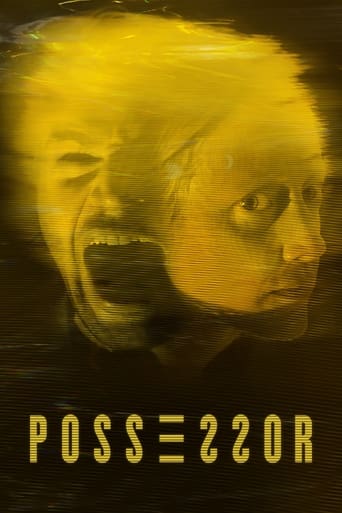
Possessor
8

Possessor

2020 · dir. Brandon Cronenberg · 103 min

Brandon Cronenberg's sci-fi horror about an assassin who implants herself in other people's minds. The practical effects and cold, clinical colour palette update the body-horror tradition for the digital age.

Where this chain leads

Genres

  • Science Fiction
  • Horror
  • Thriller
  • Mystery
  • Comedy

Log in to leave a comment.

No comments yet.