Buddy
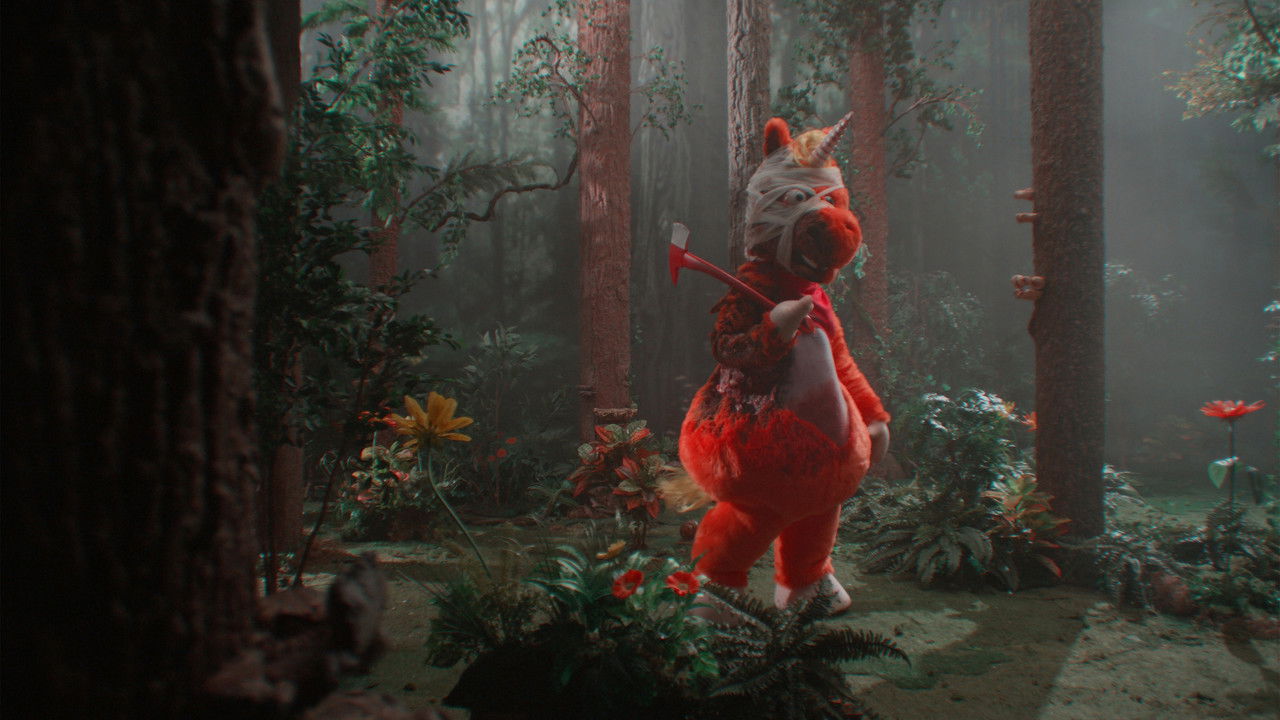
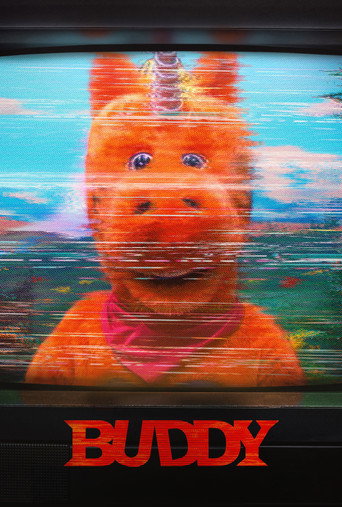
A magical, singing orange unicorn holds his cast hostage inside a surreal 1990s children's TV-show dimension, growing more demented as the broadcast continues.
Chain
Casper Kelly's Buddy lets a singing orange unicorn hold his own cast hostage inside a deranged 1990s kids' show. This chain traces the lineage of the lethal entertainer, from a killer clown to a killer doll to a killer rabbit.
Casper Kelly has spent a career finding the horror inside television's cosiest corners, and Buddy (2026) is his feature-length escalation. A magical, singing orange unicorn presides over a surreal 1990s children's programme while his cast becomes, quite literally, trapped inside the broadcast. The show is the prison. The host is the jailer. What makes the premise sting is not gore but format: the canned laughter, the puppets, the bright primary colours that refuse to stop being cheerful even as the unicorn's mind curdles. Kelly understands that a children's television studio is already a controlled environment, and that a host already has absolute authority over the people on his set.
The films gathered here share one concrete mechanism rather than a mood. Each features an entertainer, mascot or host figure who converts the apparatus of performance into a weapon, and each one lets the children's-show or family-entertainment setting become the horror set piece itself. The chain moves from the most famous American version of that figure through increasingly strange and marginal variations, testing how far the device can be stretched before it snaps.
Start with Buddy, then step back to the killer clown who made the birthday party a crime scene. From there the chain narrows to a doll who performs for children and kills on his own schedule, then to a rabbit whose cartoon body count is played for laughs, and finally to a British television host whose entire programme is a trap. The through-line is not nostalgia, and it is not the corruption of innocence in the abstract. It is the specific, repeatable plot engine of the entertainer who will not stop performing, and the audience or cast who cannot leave.
A magical, singing orange unicorn holds his cast hostage inside a surreal 1990s children's TV-show dimension, growing more demented as the broadcast continues.
Buddy → It
The Link
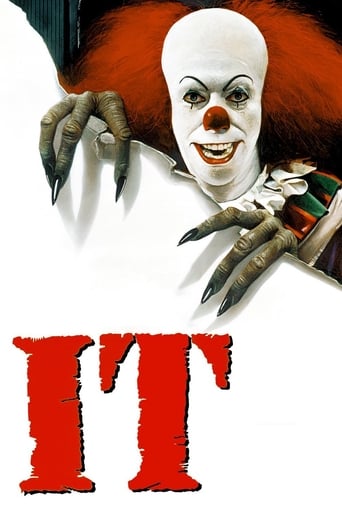
Buddy's unicorn is a singing host who turns lethal on his own set; Pennywise is the same figure in an earlier key, an entertainer whose clown costume and balloons are the lure rather than the disguise. Both films make the performance itself the trap.
A shapeshifting entity terrorises the children of Derry, most often appearing as Pennywise the Dancing Clown, a performer who lures victims with carnival charm.
It → Child's Play
The Link
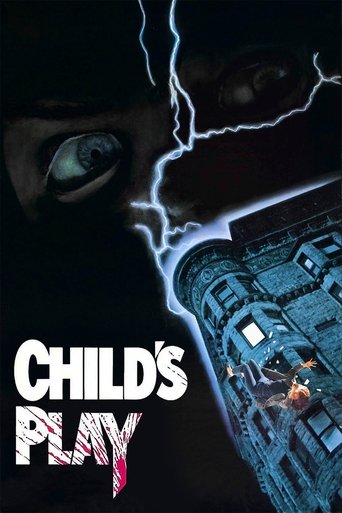
Where Pennywise performs for a whole town, Chucky is a children's entertainer product with a single audience, and the doll's cheerful catchphrases and TV commercials are the horror set piece. The franchise moves the lethal host from the circus tent into the toy aisle, the same migration Buddy makes from studio floor to broadcast signal.
A serial killer transfers his soul into a Good Guy doll, which then terrorises the family that bought it as a children's toy.
Child's Play → The Frighteners
The Link
Child's Play director Tom Holland wrote and directed this, and the film shares his fascination with showmanship as a cover for predation: the hero is a fake medium performing for paying customers while a real killer performs for an audience of the dead. The 1996 release date also places it in the same mid-90s television landscape Buddy is sending up.
A con man who can see ghosts runs a fake exorcism racket until a genuine supernatural killer starts marking victims with numbers on their foreheads.
The Frighteners → The Last Broadcast
The Link
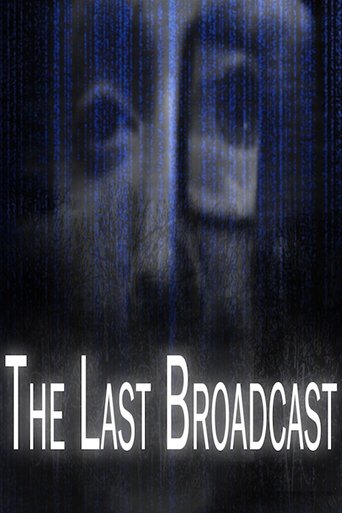
The Frighteners turns a serial killer into a mass-media event; The Last Broadcast pushes that logic to its end by making the broadcast itself the crime scene, a live television hunt for a monster that consumes its own investigators and then its viewers. Where Jackson's film uses the apparatus of tabloid television as texture, Avalos and Weiler make the format the entire trap, which is exactly the mechanism Buddy escalates into a children's studio.
Stefan Avalos and Lance Weiler's found-footage hoax, shot for a reported $900 and marketed as a real documentary, follows a public-access crew into the New Jersey Pine Barrens to hunt the Jersey Devil for a live broadcast. The film's killer is a media apparatus as much as a man, and its final reveal turns the audience into the last, most credulous participant in the show.
Related Chains
Explore
Log in to leave a comment.
No comments yet.