Girl, Interrupted
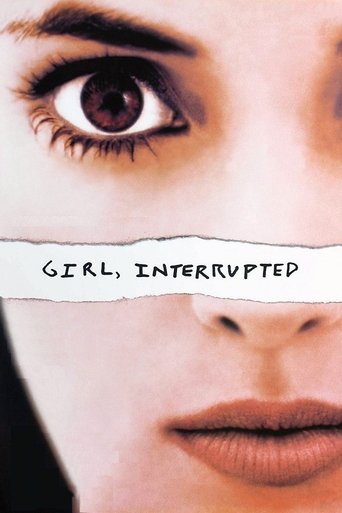
Susanna Kaysen's memoir of her two years in a psychiatric ward becomes a prism for late-60s female rebellion, anchored by Winona Ryder's brittle intelligence and Angelina Jolie's feral, scene-stealing Lisa.
Chain
From institutionalised rebellion to the raucous freedom of the last day of school, a chain of films that lets young women be messy, angry, and gloriously themselves.
For decades, the coming-of-age story belonged to boys: their rebellions, their first loves, their awkward stumbles towards manhood. Girls, when they appeared at all, were often the prize, the obstacle, or the cautionary tale. But a quiet revolution has been underway, and its chroniclers are the filmmakers who refuse to flatten girlhood into a single, palatable note. This chain traces that shift, from the institutionalised defiance of the late 1990s to the unapologetic chaos of the modern teen comedy, mapping how young women on screen have moved from being acted upon to acting, from victims of circumstance to agents of their own messy, vital stories.
The journey begins with Girl, Interrupted, a film that, for all its period trappings, felt like a thunderclap. It gave us a young woman whose 'madness' is really a refusal to conform, and it framed the psychiatric ward not as a prison but as a strange, temporary sisterhood. From there, we follow the ripples: the elegiac mystery of The Virgin Suicides, where the girls are objects of male fascination yet remain unknowable, and the fierce, funny solidarity of Ghost World, which found poetry in suburban alienation. Each step peels back another layer of expectation, leading us to the present day, where Booksmart lets its heroines be brilliant, flawed, and gloriously loud without ever asking them to apologise.
This is not a linear march of progress. Some of these films are uncomfortable, their heroines trapped by the very structures they resist. But together they form a conversation about autonomy, desire, and the right to define oneself on one's own terms. They are linked by a refusal to sentimentalise, a commitment to specificity, and a deep, abiding respect for the inner lives of young women. Whether it is the sun-bleached suburbs of Coppola's California or the rain-slicked streets of a Glasgow estate, these films share a conviction: that girlhood is not a waiting room for adulthood, but a country worth exploring in its own right.
What unites them is a particular kind of attention. These directors notice the way girls talk when no one is listening, the private languages they build, the fierce loyalties and casual cruelties that shape their days. They understand that the stakes of a stolen glance or a shared cigarette can feel as high as any battle. And they refuse to judge. The result is a cinema that feels both intimate and expansive, personal and political. It asks us to look at young women not as symbols or problems, but as people.
So this is an invitation to watch these films in sequence, to let them speak to one another. Start with Susanna's fractured journal, and end with Molly and Amy's breathless race to the party. In between, you will encounter ghosts, goths, athletes, and artists, each one a variation on a theme: the struggle to become oneself in a world that would prefer you to stay small. It is a journey worth taking, and one that rewards the patient viewer with a richer, more complicated picture of what it means to grow up female.
Susanna Kaysen's memoir of her two years in a psychiatric ward becomes a prism for late-60s female rebellion, anchored by Winona Ryder's brittle intelligence and Angelina Jolie's feral, scene-stealing Lisa.
Girl, Interrupted → The Virgin Suicides
The Link
Where Susanna survives to tell her story, the Lisbon girls are granted no such voice. Coppola's film picks up Girl, Interrupted's thread of institutional control and pushes it to its logical, devastating end, asking what happens when the only escape route is death.
Sofia Coppola's debut turns Jeffrey Eugenides's novel into a dreamy, tragic reverie. The Lisbon sisters are watched, desired, and ultimately unknowable, their suicides a final, desperate act of self-definition.
The Virgin Suicides → Ghost World
The Link
Enid is a direct descendant of the Lisbon sisters' alienation, but she is also their antidote. She is alive, furious, and armed with a withering wit, turning the male gaze into a joke and choosing her own strange path, even if that path leads nowhere in particular.
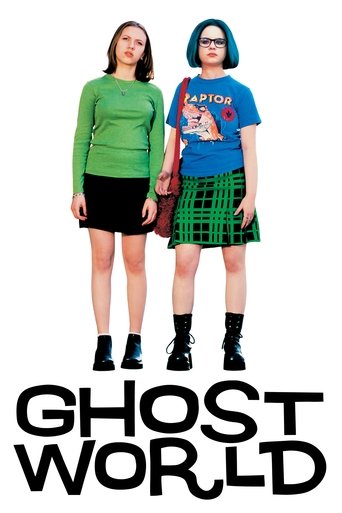
Thora Birch's Enid is a sharp-tongued outsider who refuses the script of post-high-school life. Terry Zwigoff's adaptation of Daniel Clowes's comic is a wry, melancholy portrait of refusing to grow up on anyone's terms but your own.
Ghost World → Morvern Callar
The Link
Morvern takes the quiet rebellion of Enid and makes it radical. She is not just refusing a script; she is rewriting it entirely, using her boyfriend's death as a strange kind of liberation. Ramsay's film deepens the chain's exploration of female agency, showing a woman who seizes control with unsettling calm.
After her boyfriend's suicide, Morvern (Samantha Morton) calmly disposes of his body and his manuscript, claiming the latter as her own. Lynne Ramsay's film is a hypnotic study of grief, class, and a woman who simply decides to walk away.
Morvern Callar → Persepolis
The Link
From the Scottish highlands to Tehran, the struggle continues. Marjane's story is Morvern's writ large: a fight for selfhood against forces far more powerful than any individual. Satrapi's bold black-and-white images give the chain a new visual language, but the theme is the same: the right to define oneself.
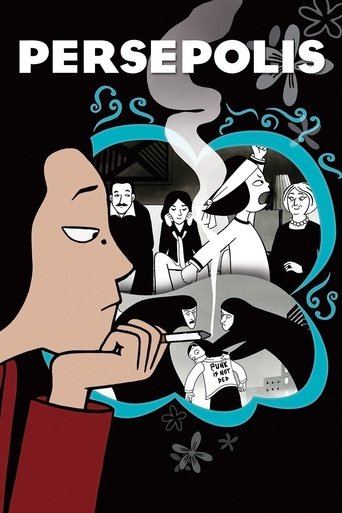
Marjane Satrapi's animated memoir of growing up during the Iranian Revolution is a punk-inflected tale of a girl who fights for her own identity against both Western hypocrisy and fundamentalist oppression.
Persepolis → Mustang
The Link
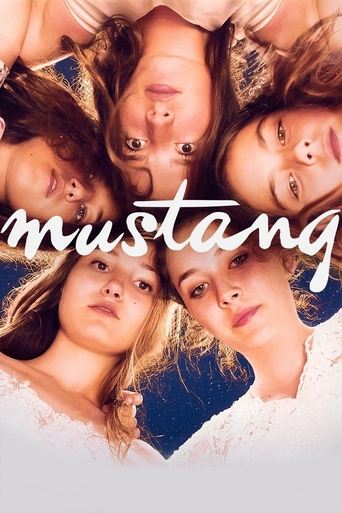
The sisters of Mustang are the Lisbon girls with a different ending. They too are imprisoned by family and tradition, but where Coppola's film ends in tragedy, Ergüven's is a story of escape and solidarity. It is a vital, hopeful counterpoint to the earlier film's despair.
In a remote Turkish village, five orphaned sisters are increasingly confined to their house as their grandmother and uncle enforce a repressive regime. Deniz Gamze Ergüven's film is a fierce, joyful rebellion against the patriarchy, shot with a sun-drenched energy.
Mustang → Lady Bird
The Link
Lady Bird is the culmination of the chain's movement towards agency. She is not a victim, not a rebel without a cause, but a fully realised, maddening, loveable teenager who is desperate to leave home and just as desperate to belong. Gerwig gives her the space to be both wrong and right, often in the same scene.
Greta Gerwig's solo debut follows Christine 'Lady Bird' McPherson through her final year of high school in Sacramento, a whirlwind of first loves, college applications, and fights with her mother. Saoirse Ronan is electric in the title role.
Lady Bird → Booksmart
The Link
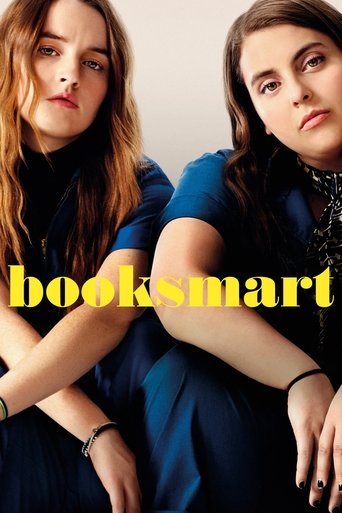
Where Lady Bird is a solo journey, Booksmart is a duet. Molly and Amy are the Lisbon sisters who refused to die, the Mustang sisters who refused to be caged. They are loud, messy, and brilliant, and their quest for a single night of hedonism is a celebration of friendship and the right to be imperfect. It is the chain's triumphant, joyful endpoint.
On the eve of graduation, two academic overachievers (Kaitlyn Dever and Beanie Feldstein) realise they have missed out on the high school party scene and set out to cram four years of fun into one night. Olivia Wilde's directorial debut is a raucous, tender comedy.
Related Chains
Explore
Log in to leave a comment.
No comments yet.