The Wicker Man
Nicolas Cage plays a sheriff who investigates a disappearance on a remote island, only to uncover a neo-pagan conspiracy. LaBute's remake strips the original's folk horror of its ambiguity, replacing it with overwrought theatrics.
Chain
From Neil LaBute's Wicker Man to Luca Guadagnino's Suspiria, a journey through remakes that stumbled yet reveal why we keep returning to the classics.
Neil LaBute's 2006 The Wicker Man is often cited as a textbook example of a remake gone wrong, a film that traded the original's folk-horror dread for Nicolas Cage's unhinged histrionics and a baffling bee-keeping subplot. Yet its very failure is instructive. It asks what happens when a story's cultural specificity is flattened into generic Hollywood tropes, and why the original's power endures precisely because of its particularity.
This chain explores remakes that missed the mark, not to mock them, but to understand the strange alchemy of adaptation. Each film, from Gus Van Sant's shot-for-shot Psycho to the misguided Clash of the Titans, stumbles in ways that illuminate the original's craft. They are fascinating failures, revealing the delicate balance of tone, context, and performance that makes a classic timeless.
Yet the journey also includes remakes that transcend their source, like Luca Guadagnino's Suspiria, which reimagines rather than replicates. These films show that the most rewarding revisits are not those that copy, but those that interrogate. The chain culminates in a work that fully embraces the spirit of reinvention, proving that the best homage is a bold new vision.
Nicolas Cage plays a sheriff who investigates a disappearance on a remote island, only to uncover a neo-pagan conspiracy. LaBute's remake strips the original's folk horror of its ambiguity, replacing it with overwrought theatrics.
The Wicker Man → Psycho
The Link
If LaBute's Wicker Man failed by changing too much, Van Sant's Psycho fails by changing too little, both demonstrating the impossibility of direct replication.
Gus Van Sant's near shot-for-shot remake of Hitchcock's masterpiece, with Vince Vaughn as Norman Bates. It's a fascinating experiment in fidelity, exposing how much of the original's power relies on performance and era.
Psycho → Funny Games
The Link
Haneke's self-remake continues the dialogue on fidelity, showing that even the director himself cannot simply transplant a film's effect.
Michael Haneke's English-language remake of his own 1997 film, with Naomi Watts and Tim Roth as a couple terrorised by two young men. Haneke deliberately recreates the original shot-for-shot, but the shift in language and actors alters its impact.
Funny Games → Suspiria
The Link
After the failures of near-identical remakes, Guadagnino's Suspiria succeeds by treating the original as a springboard, not a blueprint.
Luca Guadagnino's radical reimagining of Dario Argento's 1977 horror, set in Cold War Berlin, with Dakota Johnson and Tilda Swinton. It abandons the original's lurid colour for a muted, political dread.
Suspiria → The Ring
The Link
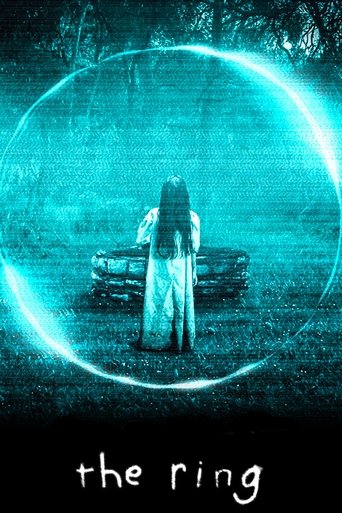
Verbinski's film proves that a remake can work when it translates cultural anxieties rather than replicating images.
Gore Verbinski's American remake of Hideo Nakata's Ringu, with Naomi Watts investigating a cursed videotape. It's a rare example of a Hollywood remake that captures the original's dread while making it accessible.
The Ring → Clash of the Titans
The Link
This remake's failure lies in its reliance on effects over story, a cautionary tale about what happens when spectacle replaces substance.
Louis Leterrier's 3D remake of the 1981 fantasy, with Sam Worthington as Perseus. It replaces the original's charming stop-motion with CGI spectacle, losing the mythic wonder.
Clash of the Titans → The Departed
The Link
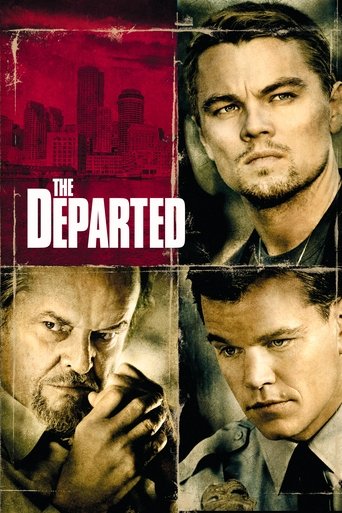
Scorsese's success demonstrates that a remake can honour its source while forging a new identity, a lesson the chain's failures underscore.
Martin Scorsese's Oscar-winning remake of Infernal Affairs, with Leonardo DiCaprio and Matt Damon as moles on opposite sides of the law. It reimagines the Hong Kong thriller with Boston grit.
The Departed → A Star Is Born
The Link
This final entry shows that the most enduring stories are those that can be retold for each generation, proving that remakes, when done right, are not just copies but continuations.
Bradley Cooper's directorial debut, with Lady Gaga as a rising singer and Cooper as a fading star. It's the fourth iteration of the story, yet feels utterly contemporary.
Related Chains
Explore
Log in to leave a comment.
No comments yet.