Log in Sign up

The Heist Film Slips Its Own Cuffs

Seven robberies that treat the job as a pretext: for politics, for grief, for a formal joke. The loot matters less than what the filmmakers smuggle out alongside it.

· ·

The heist film is a machine, and machines invite sabotage. A crew assembles, a plan is rehearsed, a variable goes wrong, and the audience is paid in suspense. That template has been profitable since the silent era, and it has also been a trap: the more efficiently it works, the less room it leaves for anything else. The interesting robberies are the ones that refuse the payoff, or relocate it somewhere the genre never expected to find it.

This chain begins with a Hollywood landmark and then keeps walking away from Hollywood, not out of snobbery but because the further the form travels, the stranger its pleasures become. Jean-Pierre Melville strips the American model to ritual and silence. Jules Dassin, blacklisted and working in Paris, turns the job into a caper so charming it nearly hides the melancholy underneath. From there the genre fractures: into the fatalism of John Huston's debut, into the class war of a British railway robbery, into the martial-arts precision of a Hong Kong master, and finally into the formal gamesmanship of a Japanese modernist who treats the whole apparatus as material for a joke about cinema itself. The through-line is not loot. It is control, and what happens when a filmmaker decides to give it up.

Watch them in order and the genre's centre of gravity shifts visibly, from the professional's code to the amateur's desperation to the auteur's mischief. Each film borrows from the one before and then breaks a rule it inherited. By the end, the heist has become a way of talking about something else entirely: memory, empire, the impossibility of a clean exit.

The Asphalt Jungle
1

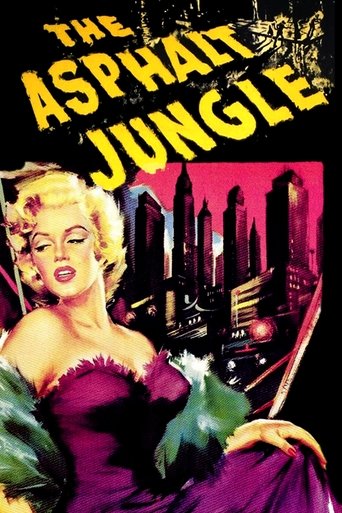
The Asphalt Jungle

1950 · dir. John Huston · 113 min

John Huston's meticulous anatomy of a jewel robbery, told from the planning through the unraveling. Its influence is so total that the genre has been quoting it for seventy-five years, often without knowing.

The Asphalt Jungle Bob le Flambeur

The Link

Melville takes Huston's procedural rigour and drains the optimism from it, replacing the American crew's professional pride with a French fatalism that treats the job as an appointment with destiny. The heist becomes a character study in slow motion.

Bob le Flambeur
2

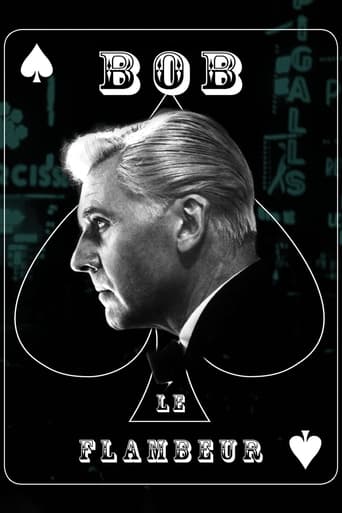
Bob le Flambeur

1956 · dir. Jean-Pierre Melville · 103 min

Jean-Pierre Melville's gambler assembles a crew for a Deauville casino job with a fatalism that feels closer to tragedy than thriller. The film's cool is a mask for its resignation.

Bob le Flambeur Rififi

The Link

Dassin, blacklisted in Hollywood, answers Melville by making the silence literal: the central set piece has no dialogue and no music, only the sound of tools on metal. Where Bob le flambeur romanticises the criminal, Rififi shows the work, then punishes it.

Rififi
3

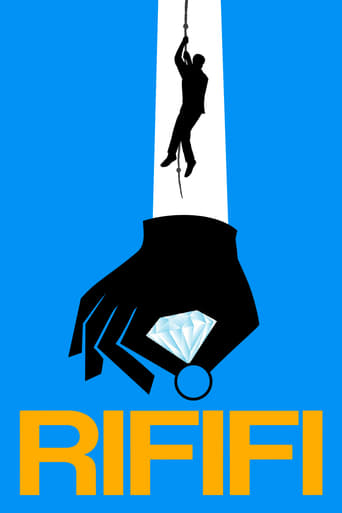
Rififi

1955 · dir. Jules Dassin · 118 min

Jules Dassin's Parisian jewel robbery, built around a thirty-minute wordless safe-cracking sequence that remains the genre's high-water mark of pure process. The film's charm is inseparable from its bitterness.

Rififi The Lavender Hill Mob

The Link

After Rififi's fatalism, the genre needed air, and Ealing supplies it: the same mechanics of planning and execution, but played for laughs that expose class and manners rather than doom. The robbery becomes a satirical instrument.

The Lavender Hill Mob
4

The Lavender Hill Mob

1951 · dir. Charles Crichton · 78 min

Alec Guinness plays a bank clerk who plots to steal gold bullion and smuggle it out as souvenir Eiffel Towers. Ealing's comic precision turns the heist into a study of English repression and its sudden, gleeful collapse.

The Lavender Hill Mob The League of Gentlemen

The Link

Dearden takes the Ealing comedy's class comedy and strips the whimsy, showing that the same organisational skills the war demanded now have nowhere to go but crime. The heist becomes an indictment of a country that has no use for its own soldiers.

The League of Gentlemen
5

The League of Gentlemen

1960 · dir. Basil Dearden · 116 min

Basil Dearden assembles a crew of disgruntled ex-officers to rob a bank, and the result is less a thriller than a diagnosis of post-war Britain. The military precision is the point, and the point is sour.

The League of Gentlemen Le Cercle Rouge

The Link

Melville returns, now with colour and an even colder eye, to show how far the genre has travelled from Huston's moral clarity. The crew here is bound by code rather than need, and the robbery is a ritual that can only end one way.

Le Cercle Rouge
6

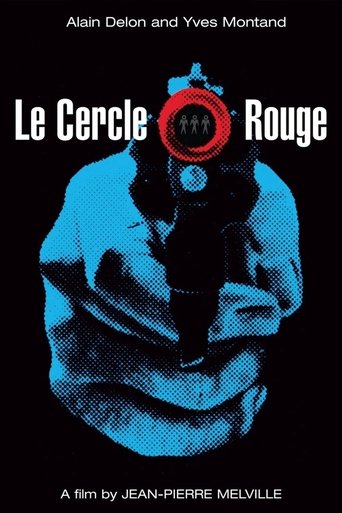
Le Cercle Rouge

1970 · dir. Jean-Pierre Melville · 140 min

Melville's late masterpiece, in which an escaped convict, a released prisoner, and a corrupt ex-policeman converge on a jewellery heist. The film's colour palette and stillness have influenced everyone from Michael Mann to John Woo.

Le Cercle Rouge The Mission

The Link

To takes Melville's stillness and turns it into movement, replacing the Frenchman's fatalism with a Hong Kong professionalism that is purely spatial. The job is no longer a robbery but a formation, and the tension comes from where bodies stand.

The Mission
7

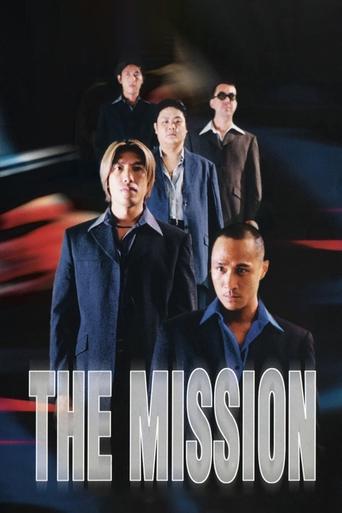
The Mission

1999 · dir. Johnnie To · 84 min

Johnnie To's Hong Kong triad film, structured around the bodyguard detail assigned to a threatened boss. The heist element is diffuse, but the film's choreography of men in rooms is the genre's logic pushed to abstraction.

Where this chain leads

Topics

Genres

  • Crime
  • Drama
  • Action
  • Thriller
  • Comedy

Log in to leave a comment.

No comments yet.