The Curse of the Jade Scorpion
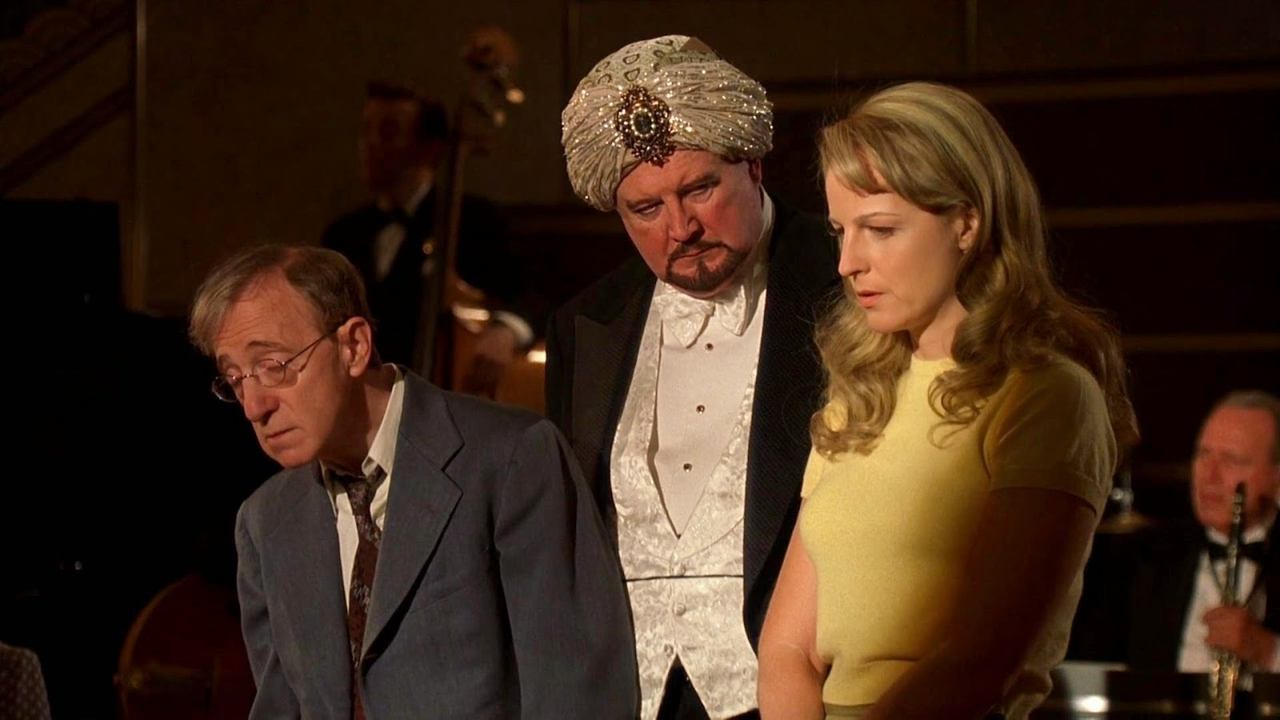
Woody Allen's comic caper about a 1940s insurance investigator and a efficiency expert who are hypnotised by a stage magician into committing a series of jewel thefts, all while bickering like an old married couple.
Chain
From Woody Allen's comic hypnosis to the chilling mechanics of control, this chain traces cinema's fascination with the mind's susceptibility.
Woody Allen's The Curse of the Jade Scorpion (2001) finds its comic tension in a most unlikely place: the hypnotist's stage. When a fraudulent magician, Voltan, places CW Briggs and Betty Ann Fitzgerald under his spell, he turns two squabbling insurance colleagues into unwitting pawns in a jewel heist. Allen's film is a light-hearted caper, but it taps into a deep well of cinematic anxiety about the loss of self, the fear that our actions might not be our own. That anxiety is the thread this chain pulls on, following it from Allen's 1940s pastiche into darker, stranger territories across genres and continents.
What unites these eight films is not just the presence of hypnosis or mind control, but the questions they raise about identity, free will, and the stories we tell ourselves to make sense of our own behaviour. In some, the control is overt, a weapon wielded by villains; in others, it is a subtler erosion of personality, a gradual surrender that feels almost voluntary. The chain moves from the playful to the paranoid, from the drawing-room comedy of Allen's film to the clinical dread of a Soviet laboratory, from the sunlit streets of Los Angeles to the rain-slicked alleys of a neo-noir Tokyo.
Each film builds on the last, offering a different lens on the same unsettling premise. You will find a classic Hollywood thriller that treats hypnosis as a criminal tool, a British chiller that locates horror in the domestic sphere, and a French shocker that pushes the idea to its most visceral extreme. There is room too for a cult favourite that turns mind control into a metaphor for consumer culture, and a modern masterpiece that asks whether we ever truly escape the scripts we are given. Together they form a conversation about the fragility of the mind, the seduction of surrender, and the terrifying possibility that the person you trust most may be the one pulling your strings.
Woody Allen's comic caper about a 1940s insurance investigator and a efficiency expert who are hypnotised by a stage magician into committing a series of jewel thefts, all while bickering like an old married couple.
The Curse of the Jade Scorpion → The Hypnotic Eye
The Link
From Allen's playful stage magician to this earnest scare picture, the hypnotist shifts from comic plot device to genuine threat, the same tool turned to darker ends.
A low-budget American thriller about a series of women who mutilate themselves under hypnosis, leading a detective to suspect a stage hypnotist with a sinister agenda.
The Hypnotic Eye → Nightmare Alley
The Link
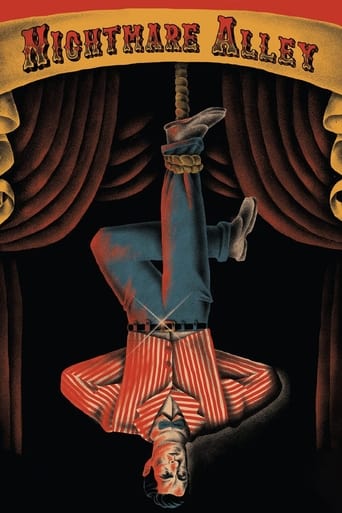
Where Allen's film treats hypnosis as a gag, this noir takes the manipulative showman seriously, exploring the moral rot beneath the stage act and the price of playing with minds.
Edmund Goulding's noir follows a carnival barker who learns the art of mentalism and uses it to con the wealthy, only to find himself trapped in his own game of deception.
Nightmare Alley → The Manchurian Candidate
The Link
The stage hypnotist gives way to state-sponsored brainwashing here, the individual's will erased by political machinery, a leap from personal manipulation to global conspiracy.
John Frankenheimer's paranoid classic in which a Korean War veteran is brainwashed by communists to become an unwitting assassin, his mind programmed with a trigger phrase and a hidden past.
The Manchurian Candidate → The Ipcress File
The Link
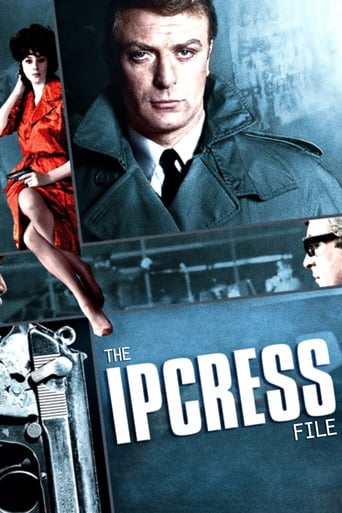
From the American paranoia of Frankenheimer to this British take on the Cold War, the brainwashing threat moves from the battlefield to the laboratory, with Palmer's cynical wit as the only defence.
Sidney J. Furie's stylish spy thriller starring Michael Caine as Harry Palmer, a British agent investigating a series of kidnapped scientists who have been subjected to a Soviet brainwashing programme.
The Ipcress File → The Stepford Wives
The Link
The Cold War's ideological control shrinks to the domestic sphere here, where the brainwashing is not political but social, a chilling satire of conformity that swaps laboratories for living rooms.
Bryan Forbes's suburban horror in which a young wife discovers that the women in her new Connecticut town are being replaced by robotic doppelgangers, programmed to be perfect homemakers.
The Stepford Wives → Possession
The Link
Where The Stepford Wives externalises control through robotics, Zulawski internalises it, showing a mind unravelling from within, the ultimate loss of self rendered as visceral nightmare.
Andrzej Zulawski's feverish horror about a woman's descent into madness and monstrous infidelity in Cold War Berlin, a film of raw emotion and body horror that defies easy description.
Possession → Eternal Sunshine of the Spotless Mind
The Link
This brings the theme full circle, from external control to self-imposed erasure, a procedure that is not brainwashing but a voluntary violation, asking whether our memories make us who we are.
Michel Gondry's romantic science-fiction in which a heartbroken man undergoes a procedure to erase memories of his ex-girlfriend, only to relive them in his subconscious and fight to keep them.
Related Chains
Explore
Log in to leave a comment.
No comments yet.