When the Slasher Leaves the Woods

A journey through horror franchises that trade the cabin and the suburb for starships, space stations and sealed institutional corridors, and find that fear changes shape when the walls become metal.

· ·

Jason X arrived in 2001 with a premise that sounds like a joke and plays like one, at least at first: the hockey-masked killer of Crystal Lake, cryogenically frozen and woken four centuries later aboard a research vessel, terrorising a crew of very expendable scientists. Yet the film's displacement is more interesting than its reputation suggests. Stripped of the lake, the cabins and the moral geography of the summer camp, Jason becomes a pure mechanism in a corridor, and the horror shifts from transgression punished to something colder: an unkillable object moving through a sealed environment. The franchise's native terrain is gone, and what remains is the shape of the threat.

That displacement is the thread this chain follows. Horror loves a closed system, and the move into space or into a futuristic institution strips away the familiar defences of the genre: no woods to hide in, no neighbours to call, no daylight to reassure. What replaces them is architecture, procedure and the terrible logic of a vessel or a facility that cannot simply be left. The fear becomes systemic rather than moral, and often more abstract.

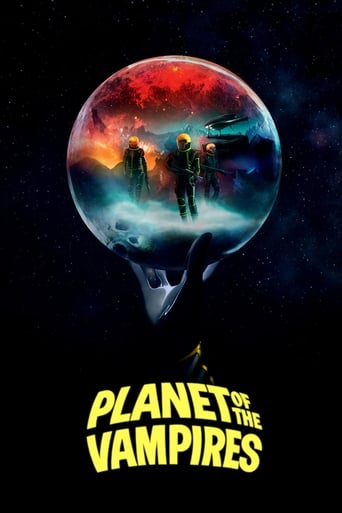
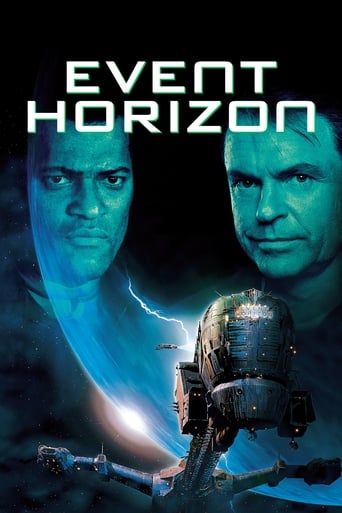
Ridley Scott's Alien is the obvious landmark, and it earns its place by making the ship itself the monster's accomplice, all dripping industrial corridors and company men who value the cargo over the crew. Mario Bava's Planet of the Vampires shows how early that idea was seeded, its fog-bound alien world and pulsing derelicts already imagining space as a haunted house. Paul W.S. Anderson's Event Horizon pushes the same sealed-vessel logic into outright supernatural dread, while Kinji Fukasaku's Battle Royale relocates the survival game into a state-run institution, proving the futuristic institution can be as pitiless as any vacuum.

Seen in sequence, these films show what happens to fear when it loses its folk roots. The slasher's moral universe gives way to something more bureaucratic and more cosmic: the killer is no longer a punishment but a fact of the environment. Start with Jason X as the hinge, the moment a native-terrain franchise takes the leap, then travel backwards and sideways through the films that made that leap possible and the ones that pushed it further.


Jason X
1

Jason X

2001 · dir. James Isaac · 91 min · TMDB 4.9

Jason Voorhees, frozen in 2008 and thawed on a research vessel in 2455, turns a sleek spaceship into a killing floor. The film's gleeful absurdity (the holographic camp simulation, the liquid-nitrogen kill) masks a genuine experiment in relocating a native-terrain slasher into a sealed, procedural environment.

Jason X → Alien

The Link

Jason X borrows the sealed-ship corridor and the expendable crew wholesale; Alien is the film that first made those corridors feel like a body. Watching them in sequence shows the slasher's mechanics being absorbed into science fiction's colder, more systemic dread.

Alien
2

Alien

1979 · dir. Ridley Scott · 117 min · TMDB 8.2

Ridley Scott's crew of the Nostromo discover that the ship's true cargo is a company asset and they are expendable. H.R. Giger's biomechanical designs and the film's slow, dripping industrial spaces make the vessel itself feel alive and hostile.

Alien → Planet of the Vampires

The Link

Where Alien industrialised the haunted ship, Bava got there first with pure atmosphere: a planet that behaves like a graveyard and corpses that refuse to stay put. The chain moves backwards here to show the gothic roots beneath the sci-fi surface.

Planet of the Vampires
3

Planet of the Vampires

1965 · dir. Mario Bava · 88 min · TMDB 6.4

Mario Bava's Italian space opera strands two ships on a fog-shrouded alien world where dead crewmen rise and walk. Its pulsing, colour-drenched derelicts and possession plot anticipate decades of space horror, and Bava's visual imagination turns cheap sets into genuine unease.

Planet of the Vampires → Event Horizon

The Link

Bava's walking dead find their 1990s descendant in the crew of the Event Horizon, driven to mutilation by something beyond the veil. Anderson's film takes the sealed vessel and makes the threat explicitly supernatural, closing the loop between gothic possession and spacefaring horror.

Event Horizon
4

Event Horizon

1997 · dir. Paul W. S. Anderson · 96 min · TMDB 6.6

A rescue crew boards a ship that has returned from a dimension of pure chaos, and Paul W.S. Anderson lets the film slide from procedural sci-fi into a hallucinatory haunted-house descent. Laurence Fishburne's weary captain anchors the escalating madness.

Event Horizon → Battle Royale

The Link

Event Horizon's ship is a controlled system that turns on its crew; Battle Royale makes that system a government programme with rules, collars and a scoreboard. The displacement moves from outer space to a futuristic institution, but the logic is identical: the environment is the executioner.

Battle Royale
5

Battle Royale

2000 · dir. Kinji Fukasaku · 114 min · TMDB 7.3

Kinji Fukasaku's class of Japanese teenagers are shipped to an island and forced to kill each other by a state programme with a cheerful instructional video. The film's satire of institutional violence is as sharp as its set pieces are brutal.

Battle Royale → The Texas Chain Saw Massacre

The Link

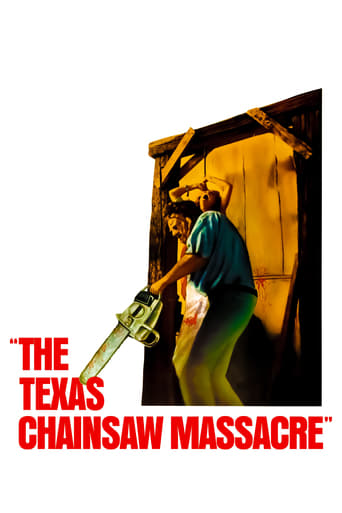
Battle Royale's teenagers are hunted by a system; Hooper's teenagers are hunted by a family, and the film is the native-terrain horror that Jason X and its kin abandoned. Placing it here shows exactly what is lost when the woods are replaced by corridors: the folk terror of the land itself.

The Texas Chain Saw Massacre
6

The Texas Chain Saw Massacre

1974 · dir. Tobe Hooper · 83 min · TMDB 7.3

Tobe Hooper's sweaty, sun-bleached nightmare of five friends and a family of killers in rural Texas. Its near-documentary texture and relentless sound design make the slaughterhouse feel like an entire world.

The Texas Chain Saw Massacre → Cube

The Link

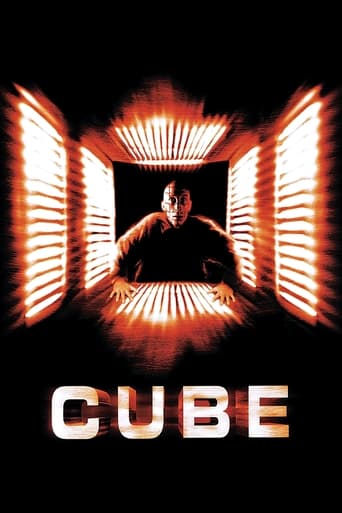
Hooper's killers at least have a house; Natali's characters have only rooms that may kill them, with no killer at all. The chain narrows from the folk horror of place to the pure abstraction of a futuristic institution, where fear is generated by architecture alone.

Cube
7

Cube

1998 · dir. Vincenzo Natali · 90 min · TMDB 6.8

Vincenzo Natali's strangers wake inside a vast, lethal puzzle of identical rooms with no explanation and no exit. A lean Canadian indie that turns geometry into a villain and paranoia into the only available weapon.

Cube → High Life

The Link

Cube reduces horror to a system with no author; High Life asks what happens when that system is a ship, a prison and a womb at once. Denis closes the chain by showing that the displaced franchise's sealed environment can become something more disturbing than a trap: an experiment in being human.

High Life
8

High Life

2018 · dir. Claire Denis · 113 min · TMDB 5.7

Claire Denis sends a death-row crew toward a black hole, and the ship becomes a laboratory for reproduction, desire and violence. Robert Pattinson's quiet father figure and the film's strange, tender brutality make it a singular entry in the space-horror canon.

Where this chain leads

Genres

  • Science Fiction
  • Horror
  • Action
  • Adventure
  • Mystery
  • Thriller
  • Drama

Log in to leave a comment.

No comments yet.